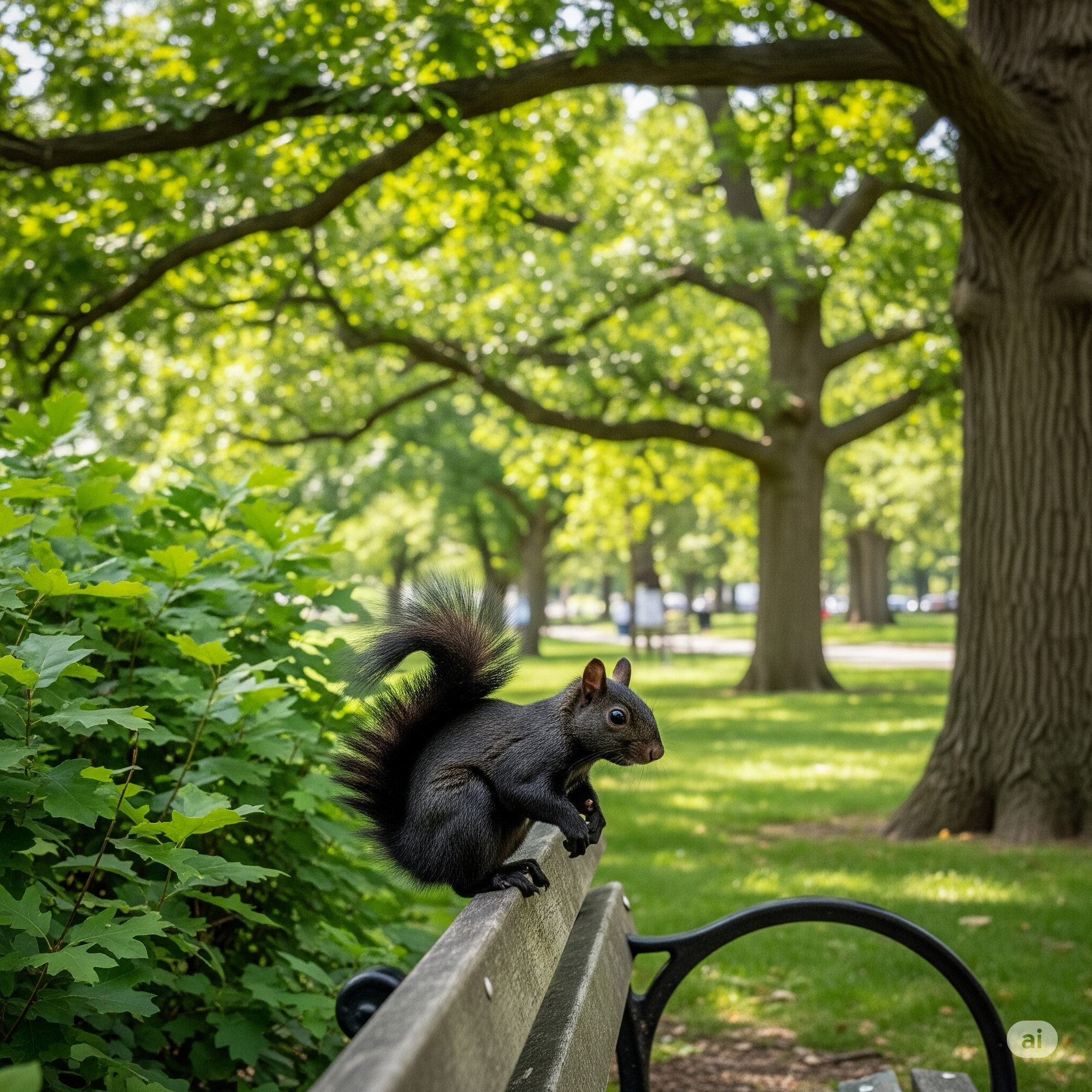
Looking for Black Squirrels? Here’s Exactly Where to Find Them
- July 20, 2025
- by
- John Miller
Alright, so you’re hooked. You’ve learned that black squirrels aren’t some mythical creature but a real, living example of genetics in action. The awe of seeing that flash of jet-black fur is undeniable, and now you’re probably asking the big question: “Where can I actually go to see one for myself?”
You’re in the right place. While a black squirrel might be the celebrity of your local park, appearing only once in a blue moon, there are definite “hotspots” across North America where your chances of spotting one go from “maybe” to “almost certain.”
Think of this article as your personal treasure map. We’re going to skip the dense scientific jargon and give you the straightforward guide to the states, provinces, and even specific cities where these beautiful critters are not just surviving, but absolutely thriving.
First Off, Why Aren’t They Just… Everywhere?
Before we jump into the map, let’s have a quick refresher. Why isn’t your backyard in, say, Texas or California crawling with them?
It all boils down to two things: history and a superpower.
Historically, they loved the vast, dark forests that once covered the continent. But as those forests disappeared, so did their camouflage. The big reason for their modern success, however, is their superpower: that black fur is like a solar-powered winter jacket. It helps them soak up the sun and stay toasty in frigid weather.
That’s your biggest clue. To find black squirrels, you generally need to head north, where a warm coat really matters.
The Black Squirrel Belt: Your Best Bets for a Sighting
Ready to plan your trip? Let’s tour the “Black Squirrel Belt,” the region where these squirrels are the undisputed rock stars of the rodent world.
The Epicenter: The Great Lakes Region & The US Midwest
This area is the absolute heartland for black squirrels. If you’re serious about finding one, this is where you start.
- Michigan: If I had to bet on one state, it would be Michigan. They are incredibly common here. From the urban parks in Detroit to the sprawling campus of Michigan State University (MSU) in East Lansing, they are a familiar sight. In many Michigan neighborhoods, asking “have you seen a black squirrel?” is like asking “have you seen a tree?”
- Ohio: Ohio is home to the unofficial black squirrel capital of the world: Kent. The campus of Kent State University is legendary. The story goes that in 1961, a university groundskeeper brought ten black squirrels over from Canada. They loved it, they thrived, and today they’re the beloved mascot of the university. It’s a fantastic, real-world experiment in wildlife introduction.
- Illinois, Wisconsin, & Indiana: Your odds are still fantastic in these states. Big cities like Chicago and Milwaukee, especially in older neighborhoods with massive, mature trees, are great hunting grounds. They’ve established strong, healthy populations throughout the region.
The Canadian Stronghold: Ontario and Quebec
If you head north of the border, it’s a whole different ball game. In many parts of Canada, black squirrels are the norm, and the grey ones are the less common sight!
- Ontario: Toronto, Ottawa, and Hamilton are crawling with them. On Parliament Hill in Ottawa, you can watch them chase each other around with the iconic Peace Tower in the background. It’s a classic Canadian experience.
- Quebec: Montreal also has a very healthy and visible population, proving their love for cold, snowy winters. For a squirrel enthusiast, visiting a park in Toronto or Montreal is like hitting the jackpot.
The East Coast Pockets
While not as dominant as in the Midwest, the East Coast has some very reliable pockets.
- Washington D.C.: The nation’s capital has a secret society… of black squirrels. They were reportedly introduced to the National Zoo over a century ago, they (predictably) escaped, and decided the city’s parks were a pretty good place to live. They’ve been there ever since.
- Pennsylvania, New York, & New England: You can definitely find them here, but they are less common than their grey cousins. Sightings are more of a special event. However, established populations exist in cities like New York and Boston, you just have to keep your eyes peeled.
What About the West Coast and the South?
This is where a black squirrel sighting goes from a fun objective to a genuine “stop the car!” moment.
If you see a black squirrel in Florida, Georgia, California, or Texas, you should probably consider buying a lottery ticket. It’s incredibly rare. The reason is simple: their “winter coat” superpower is useless in the heat. The grey squirrel’s lighter color provides better camouflage and helps it deal with the hot climate, giving it a huge advantage. While a few isolated introductions might have happened here and there, they have never established a major foothold.
Pro Tips for Your Black Squirrel Hunt
Ready to go on your own squirrel safari? Here are a few tips to increase your chances:
- Visit a University Campus: Seriously, this is the number one hack. Campuses in the Black Squirrel Belt (like Kent State or MSU) are gold mines. The squirrels there are used to people and are often out and about.
- Look in Old Neighborhoods & Parks: Think big, mature oak, walnut, and maple trees. That’s prime real estate for any squirrel, as it means food and shelter.
- Timing is Everything: They are most active in the early morning and late afternoon when they are out foraging for food.
- Be Patient: At the end of the day, they’re wild animals. Grab a coffee, find a park bench in a known hotspot, and just enjoy being in nature. The reward will be worth it.
So there you have it. Your complete guide to finding the elusive black squirrel. Now you know their secrets. Happy hunting!
Now that you know where to find them, are you curious about their personalities? Are they the bullies of the bird feeder? We tackle all the myths in our next article!