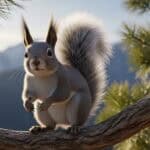
If you have ever hiked through the high-altitude forests of the American Southwest, you might have spotted a squirrel that looks like it belongs in a fairytale. With long, elegant ear tufts and a bushy, frosted tail, the Abert’s squirrel is a true gem of the Rocky Mountains. As someone who has spent years tracking wildlife through the Ponderosa pines, I can tell you that these creatures are far more than just “cute” rodents. They are a vital part of a delicate mountain balance.
At squirrelsinfo, we believe that understanding the specific needs of local wildlife helps us appreciate the natural world. In this guide, I will share my observations and research on the Abert’s squirrel, covering everything from their unique diet to where they fit in the broader family tree of squirrels.
Taxonomy and Classification of Sciurus aberti
Scientifically known as Sciurus aberti, this species belongs to the tree squirrel family. Unlike common gray squirrels you might find in a city park, the Abert’s squirrel is a specialist. Its evolution is tied directly to the Ponderosa pine trees found in the Colorado Plateau and surrounding regions.
Understanding Abert’s Squirrel Color Morphs: Red vs. Black
One of the most fascinating things about this species is its “color morphs.” Depending on where you are, an Abert’s squirrel might look like a completely different animal.
- The Classic Gray/Red Morph: Most common in Arizona and New Mexico, these squirrels have a salt-and-pepper gray coat with a distinct reddish-brown stripe running down their back.
- The Black Abert’s Squirrel: In parts of Colorado, specifically near the Front Range, a large portion of the population is melanistic. This means they are almost entirely jet black.
- The Kaibab Squirrel: This is actually a subspecies of the Abert’s squirrel, found only on the North Rim of the Grand Canyon. It has a white tail and a black belly, showing how isolation can change a species over thousands of years.
Physical Characteristics and Identification
Identifying an Abert’s squirrel is easy once you know what to look for. Their most famous feature is their “tassel ears.” During the winter months, they grow long tufts of hair on the tips of their ears that can reach over an inch in length. These tufts usually disappear during the summer molt.
Size and Weight Comparison
An adult Abert’s squirrel typically weighs between 1.5 and 2 pounds. They are larger and sturdier than the common pine squirrel (chickaree) but lack the heavy-set build of a rock squirrel. Their length usually falls between 18 and 22 inches, with the tail making up nearly half of that.
Adaptations for Survival in High Altitudes
Living at 6,000 to 9,000 feet requires some serious gear. Their thick fur provides excellent insulation against sub-zero mountain temperatures. Their powerful back legs allow them to leap between swaying pine branches even in heavy winds. Their claws are sharp and curved, perfect for gripping the rough bark of the Ponderosa pine.
Habitat and Geographic Range
You won’t find an Abert’s squirrel in a hardwood forest or a swamp. They live where the Ponderosa pine grows. This “obligate” relationship means that if the trees vanish, the squirrels do too.
The Ponderosa Connection
The squirrel relies on the tree for everything: food, shelter, and protection. In return, the squirrel helps the forest. They eat mycorrhizal fungi (truffles) found near the tree roots and spread the spores through their droppings. These fungi help the trees absorb water and nutrients. It is a perfect partnership.
Range Map Overview
The Abert’s squirrel range is primarily centered in Northern Arizona, New Mexico, and Colorado. Small populations also exist in Utah, Wyoming, and parts of Mexico. If you are visiting the Grand Canyon or the Rocky Mountain National Park, keep your eyes on the mid-to-upper canopy of the pines.
Behavior and Survival Tactics
During my years of wildlife observation, I have noticed that Abert’s squirrels are much quieter and more elusive than their chatty cousins, the fox squirrels. They spend a significant amount of time on the ground foraging, but they are always within a quick dash of a trunk.
Dietary Needs: Feeding on Pinyon Pine and Phloem
While they do eat seeds from pinyon pines and Douglas firs, their primary food source is the Ponderosa pine itself. During the winter, when seeds are scarce, they peel back the outer bark of young twigs to eat the sweet, nutrient-rich inner bark (the phloem). This leaves behind “clippings” on the forest floor, which is a telltale sign that a squirrel is nearby.
People often wonder if they eat things like nuts or human snacks. While they prefer pine products, you can learn more about general squirrel diets, such as can squirrels eat pistachios, to see how different species handle various food sources.
Nesting Habits: Where Do Abert’s Squirrels Sleep?
Abert’s squirrels are master builders. They create large, messy-looking nests called “dreys.” These are built high up in the pines, usually supported by a fork in the branches or against the trunk.
They use twigs for the outer structure and line the inside with dry grass and shredded bark. If you are curious about the mechanics of these homes, you can read about how squirrels make nests to understand the engineering involved. These nests are crucial for keeping them warm during heavy mountain snowfalls and provide a safe space for where squirrels sleep away from nocturnal predators.
Life Cycle and Population Health
Baby Abert’s squirrels are usually born in late spring or early summer. A typical litter has 2 to 4 kits. They are born hairless and blind, relying entirely on their mother’s warmth and milk. By seven weeks, they are adventurous enough to peek out of the nest, and by ten weeks, they are learning to forage for themselves.
Predators and Natural Threats
Life in the mountains isn’t easy. Goshawks and Mexican spotted owls are their primary aerial threats. On the ground, bobcats, coyotes, and even mountain lions may take a squirrel if the opportunity arises. Despite these predators, the biggest threat to their population is habitat loss due to forest fires and climate change affecting the Ponderosa forests.
Are Abert’s Squirrels Endangered?
Currently, they are not listed as endangered. However, because they are an “indicator species,” scientists watch them closely. If the squirrel population drops, it usually means the forest is unhealthy. Protecting the Ponderosa pine is the only way to ensure these squirrels thrive for generations.
Abert’s Squirrel vs. Kaibab Squirrel
One of the most frequent questions I get at squirrelsinfo is about the difference between the Abert and the Kaibab. While they are essentially the same species, they have been separated by the Grand Canyon for so long that they look quite different.
- Tail: The Kaibab has a bright, snowy white tail, while the Abert’s tail is usually gray or black.
- Belly: The Kaibab has a black belly, whereas most Abert’s squirrels have a white or light-colored underside.
- Mating: Because they are geographically isolated by a massive canyon, they do not mate in the wild. However, biologically, they are still compatible.
Human Interaction and Conservation
Many people find these squirrels so charming that they wonder about keeping them as pets. I strongly advise against this.
Why You Cannot Keep an Abert’s Squirrel as a Pet
In most states like Arizona and Colorado, it is illegal to keep an Abert’s squirrel as a pet without very specific permits. These are wild animals with high energy and very specific dietary needs that cannot be met in a house. They are also prone to stress when confined.
Hunting Regulations
Hunting is permitted in some states during specific seasons. For instance, in Arizona, there is a small-game season for Abert’s squirrels. Always check with the local Department of Wildlife for the most current rules and permit requirements to ensure you are acting within the law.
Expert Tips for Wildlife Spotting
If you want to see an Abert’s squirrel in the wild, follow these tips:
- Time of Day: They are most active in the early morning, shortly after sunrise.
- Look for Clippings: Look for small, peeled twigs on the ground under large Ponderosa pines.
- Listen: They make a “chuck-chuck-chuck” sound when they are annoyed by your presence. Follow the sound upward!
- Stay Still: If you find a promising tree, sit quietly at its base. These squirrels are curious and will eventually come down if they think you aren’t a threat.
The Abert’s squirrel is a reminder of how interconnected our world is. From the fungi in the soil to the needles in the canopy, every piece of their environment matters. By protecting our forests, we protect these magnificent tassel-eared climbers.
Common Questions About Abert’s Squirrels
While both belong to the same species (Sciurus aberti), they are separated by the Grand Canyon. The Kaibab squirrel lives only on the North Rim and features a striking white tail and black belly. The Abert’s squirrel typically has a gray or black tail and a white belly.
These “tassels” are most prominent during the winter months. While scientists are still studying the exact purpose, they likely provide extra insulation during freezing mountain temperatures or play a role in social communication between squirrels.
No, they are not currently listed as endangered or threatened. However, they are considered an “indicator species.” This means their population health reflects the overall health of the Ponderosa pine ecosystem. Significant drops in their numbers often signal forest distress.
No. In states like Arizona, Colorado, and New Mexico, it is generally illegal to keep these squirrels as pets. They have highly specialized diets and social needs that cannot be met in a home environment. Furthermore, they are protected under state wildlife laws.
When seeds and fungi are buried under snow, these squirrels rely on the Ponderosa pine’s inner bark, known as phloem. They clip small twigs, peel away the outer bark, and eat the nutrient-rich layer underneath. You can often find these “clippings” littering the forest floor in winter.
No, they are active year-round. They rely on their thick winter coats and well-insulated nests (dreys) to survive the harsh mountain winters. On extremely cold or stormy days, they may stay inside their nests for a day or two to conserve body heat.
In the wild, most Abert’s squirrels live between 3 to 5 years. Predators, harsh weather, and food availability are the primary factors that determine their lifespan.