
Diet & Feeding
Do squirrels eat tomatoes
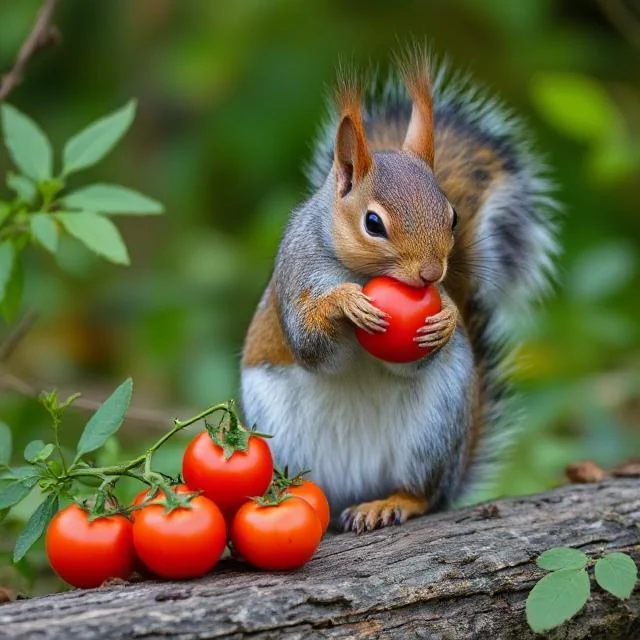
Do Squirrels Eat Tomatoes?
Yes. Squirrels eat tomatoes, and ripe ones are their favorite. A tomato that's just turning red is basically a flashing sign that says "free juice bar" to every squirrel in the neighborhood.
They don't eat tomatoes because they're picky — quite the opposite. Squirrels are opportunistic omnivores. They'll sample almost anything, and a soft, sweet, water-packed tomato sitting out in the open is an easy win. Cherry tomatoes get hit hardest because they're bite-sized and easy to carry off.
You'll usually find half-eaten fruit still on the vine, or tomatoes with a single clean bite taken out. That's the classic squirrel signature. They taste, they move on, they come back tomorrow. One squirrel can ruin a dozen tomatoes in a week without ever finishing a single one.
Do Squirrels Eat Tomato Plants Too?
Yes — when the fruit isn't available, the plant itself becomes the target. Squirrels will chew leaves, stems, flowers, and young seedlings, especially in spring before any fruit has set.
Seedlings are the most vulnerable. A squirrel can clip a young transplant clean off at the base in seconds. Flowers get nipped because squirrels are checking whether anything edible is forming yet. Mature leaves get chewed less often, but a hungry squirrel won't skip them.
Here's something most garden guides skip: tomato leaves contain tomatine, a bitter compound that's mildly toxic to many animals. Squirrels seem to know this instinctively — they rarely eat large amounts of foliage. They'll nibble, taste the bitterness, and move on to the fruit. But "rarely" isn't "never," and a stressed, hungry squirrel in late winter or early spring will chew leaves anyway.
Why Do Squirrels Go After Tomatoes?
Three reasons: water, sugar, and easy access.
Tomatoes are over 90% water. For a squirrel in the heat of summer, a tomato is both a meal and a drink. That matters more than most gardeners realize — during dry spells, tomato raiding spikes because natural water sources dry up.
Then there's the sugar. As tomatoes ripen, starches convert to sugars, and squirrels — like most mammals — are wired to seek out sweet, calorie-dense food. A fully ripe tomato is one of the sweetest things in your garden.
And access couldn't be easier. Tomato plants grow at exactly the right height. The fruit hangs in the open. There's no shell to crack, no thorns to fight through. Compared to the work of opening a hickory nut, a tomato is fast food.
Are Tomatoes Safe for Squirrels?
Ripe tomato fruit is safe for squirrels. There's nothing in a red, ripe tomato that harms them. Wildlife rehabilitators even use small pieces of tomato as part of a varied diet for recovering squirrels.
Green tomatoes and plant parts are a different story. Unripe fruit, leaves, and stems contain tomatine, which can cause digestive upset in large amounts. Squirrels generally self-regulate — the bitter taste puts them off before they eat enough to get sick. But it's one more reason they prefer ripe fruit.
Bottom line: you don't need to worry about poisoning the local squirrels with your tomato patch. Worry about them eating the entire patch instead.
When Do Squirrels Strike Your Tomatoes?
Here's a myth worth killing: squirrels are not nighttime raiders. They're diurnal — active during the day, asleep at night. If your tomatoes vanish overnight, the culprit is more likely a raccoon, rat, or opossum.
Squirrel damage happens at dawn and dusk, their two peak feeding windows. They'll hit your garden in the first hour after sunrise, then disappear for the midday heat, then return in the early evening. Most gardeners discover the damage in the morning and assume it happened overnight. It didn't — it happened at 6 a.m. while you were still asleep.
Damage also follows the ripening calendar. You'll get almost no squirrel attention while fruit is green and hard. The week your tomatoes start blushing red is the week the raids begin. Picking tomatoes at the "breaker" stage (first hint of color) and ripening them indoors is one of the simplest defenses there is.
Which Squirrels Are the Worst Offenders?
Not all squirrels raid gardens equally. Ground squirrels are by far the biggest threat to tomato plants. Species like the California ground squirrel live in burrows, forage almost entirely at ground level, and treat vegetable gardens as personal buffets. If your plants are being stripped to the stems, ground squirrels are the likely culprits.
Tree squirrels — gray squirrels and fox squirrels — are more opportunistic. They prefer nuts and seeds, and they'll only bother with tomatoes when those run short or when a ripe tomato is hanging right in their path. They're the ones taking single bites out of fruit and leaving the rest.
Knowing which type you're dealing with changes your strategy. Ground squirrels dig under fences, so buried barriers matter. Tree squirrels jump from branches, so trimming overhanging limbs matters more.
Is It Squirrels? How to Tell What's Eating Your Tomatoes
Before you declare war on squirrels, make sure they're actually the problem. Different pests leave different evidence:
| Pest | Damage signs | When it happens |
|---|---|---|
| Squirrels | Clean bites out of fruit, half-eaten tomatoes left on vine or dropped nearby, clipped seedlings | Dawn and dusk |
| Birds | Peck holes (small, deep punctures), usually on the top of the fruit | Daytime |
| Rats/mice | Gnawed edges, fruit eaten from the bottom up, droppings nearby | Night |
| Hornworms | Leaves stripped, large green droppings, fruit with surface chewing | Night (hide by day) |
| Raccoons | Whole plants knocked over, multiple fruits destroyed in one visit | Night |
Squirrel damage is neat. Clean bites, fruit carried a short distance and dropped, stems clipped at an angle. If your garden looks like a tornado hit it, that's raccoons. If the damage is surgical, that's squirrels.
How to Keep Squirrels Off Your Tomatoes: 8 Methods That Work
No single trick works forever — squirrels are smart and they adapt. The gardeners who win are the ones who layer two or three methods together. Here's what actually works, ranked roughly by reliability.
1. Fence them out (most reliable)
A physical barrier is the only method squirrels can't outsmart. Use 1-inch chicken wire or hardware cloth, at least 3 feet tall. The critical step most people skip: bury the bottom 6 inches in an L-shape facing outward. Ground squirrels dig, and an unburied fence is just a suggestion.
For individual plants or small beds, wire cloches and tomato cages wrapped in netting work well. It's more labor up front, but it's the closest thing to a permanent fix.
2. Net your plants
Bird netting draped over tomato cages stops squirrels from reaching the fruit. Use netting with mesh smaller than 1 inch so they can't push their heads through. Secure it at the bottom — a squirrel will happily crawl under loose netting.
Netting is cheaper than fencing and works great for a few prized plants. For a large garden, fencing the whole bed is more practical.
3. Pick at breaker stage
This is the simplest trick on the list and most gardeners don't know it. Tomatoes picked at the first blush of color ripen perfectly indoors — on a counter, not in the fridge — with no loss of flavor. Squirrels almost entirely ignore green fruit. By harvesting early, you remove the target before the raids start.
4. Repellent sprays
Squirrels hate strong tastes and smells. A spray made from cayenne pepper, garlic, or peppermint oil mixed with water makes tomatoes unappealing. Capsaicin-based commercial repellents work too.
The catch: you have to reapply after every rain, and heavy dew dilutes it. Sprays work best as a supplement to a physical barrier, not a replacement. Never spray anything on fruit you plan to eat without washing it thoroughly first.
5. Motion-activated sprinklers
Squirrels startle easily. A motion-activated sprinkler delivers a sudden burst of water right when they approach, and most squirrels decide your garden isn't worth the shower. These work well for a few weeks — then some bold squirrels learn the timing. Move the sprinkler every week or two to keep them guessing.
6. Cut off their launchpads
Tree squirrels reach gardens by jumping from branches, fences, and sheds. Trim any branch within 8–10 feet of your tomato beds. It won't stop ground squirrels, but it forces tree squirrels to cross open ground, which they hate doing — it exposes them to hawks.
7. Give them something better
This sounds counterintuitive, but a diversion feeding station placed far from your garden can work. Fill it with cheap corn, sunflower seeds, or peanuts. The idea isn't to feed every squirrel in the county — it's to give the ones already visiting your yard an easier option than your tomatoes.
Place the station at least 30 feet from your beds, ideally on the opposite side of the yard. Refill it consistently or they'll go right back to the tomatoes.
8. Companion planting (mild help)
Strong-smelling plants like garlic, onions, marigolds, and daffodils planted around your tomatoes may discourage casual browsing. Be honest with yourself, though: this is the weakest method on the list. A determined squirrel walks right past marigolds. Use it as a supplement, not a strategy.
What about ultrasonic repellers?
You'll see these advertised everywhere. The honest answer: the evidence is thin. Some gardeners swear by them; controlled tests show squirrels habituate within days. If you try one, don't rely on it alone.
A note on live trapping
Live traps work, but check your local wildlife laws first. Many areas require permits to trap and relocate squirrels, and some prohibit relocation entirely (relocated squirrels often die, and you may just be handing your problem to a neighbor). Trapping without a plan for what comes next isn't a solution.
Do Squirrels Eat Other Garden Vegetables Too?
Yes — tomatoes are just the beginning. Squirrels also go after peppers, cucumbers, strawberries, corn, sunflowers, and beans. Anything sweet, juicy, or seed-packed is fair game. The methods above protect your whole garden, not just the tomatoes, so think of this as a general garden defense plan.
Peppers deserve a special mention: squirrels will eat sweet bell peppers readily but usually avoid hot varieties. If you're choosing what to plant, that's a point in favor of the hot ones.
FAQ
Do squirrels eat tomatoes?
Yes. Squirrels eat tomatoes — especially ripe ones. They're attracted to the juice, sweetness, and high water content. Cherry tomatoes get hit hardest because they're bite-sized and easy to carry.
Do squirrels eat tomato plants or just the fruit?
Both, but fruit is the main target. Squirrels will also chew leaves, stems, flowers, and seedlings — especially in spring before fruit sets. Mature leaves contain bitter tomatine, so they're eaten less often.
Do squirrels eat green tomatoes?
Yes, but they prefer ripe ones. Green tomatoes get eaten when ripe fruit is scarce or when a squirrel is just sampling. Picking at breaker stage (first color) avoids most damage.
Do squirrels eat tomatoes at night?
No — squirrels are diurnal and sleep at night. The damage happens at dawn and dusk. If tomatoes vanish overnight, suspect raccoons, rats, or opossums instead.
Will squirrels eat tomato plants to the ground?
Ground squirrels can strip young plants badly, but established plants usually survive leaf nibbling. Seedlings are the most vulnerable — protect them with cloches or cut-off milk jugs until they're sturdy.
Are tomatoes poisonous to squirrels?
Ripe fruit is safe. Green fruit, leaves, and stems contain tomatine, which is mildly toxic in large amounts — but squirrels self-regulate because of the bitter taste and rarely eat enough to get sick.
What's the best way to keep squirrels out of tomatoes?
Layer defenses: fence the bed (bury the bottom 6 inches), net individual plants, and pick fruit at breaker stage. Add repellent spray or a motion sprinkler as backup. No single method works alone for long.
Do coffee grounds keep squirrels away from tomatoes?
There's no solid evidence for this. Coffee grounds may mildly deter some squirrels with the smell, but determined ones ignore it. Don't rely on it — use fencing or netting instead.
Sources
- Cornell University College of Agriculture and Life Sciences — wildlife damage management resources on tree and ground squirrels
- University of California Integrated Pest Management (UC IPM) — ground squirrel management guidelines for gardens
- National Pesticide Information Center, Oregon State University — tomatine and solanine in nightshade plants
- Humane Society of the United States — humane deterrence methods for garden wildlife

About the author
Harry Brian
Wildlife Content Writer and Editorial Contributor
Harry Brian is a wildlife content writer at SquirrelsInfo. He creates and updates practical guides about squirrel behavior, diet, species, habitat, life cycle, and humane coexistence. His goal is to turn complex wildlife topics into clear, useful information for homeowners, gardeners, and curious readers.
Full profile and articles →Keep exploring
Related guides
Can Squirrels Eat Chocolate? A Wildlife Expert’s Warning
You are sitting on a park bench. You have half a chocolate bar left. A brave squirrel approaches, twitching its nose at the sweet scent. It is tempting to share a piece. Please don't. As a wildlife researcher, I have seen the results of human food on urban ani
Why Do Squirrels Eat Mice? The Shocking Truth About Their Omnivorous Diet
Squirrels have long been thought of as herbivores, primarily living off nuts, seeds, and fruits. But the truth is much more complex. While their diet largely consists of plant-based food, they are opportunistic omnivores, meaning they sometimes turn to meat to
Do Squirrels Eat Pistachios ? Exploring the Nutty Habit of Our Furry Friends
Squirrels are famous for their nutty cravings, often spotted scurrying around trees with acorns, walnuts, or hazelnuts in their tiny paws. But a common question many people ask is: “Do squirrels eat pistachios?” If you’re curious about whether these little cre
What Do Baby Squirrels Eat? A Simple Guide for Wildlife Enthusiasts
If you’ve ever stumbled upon a baby squirrel or wondered what they eat during their early days, you're not alone. Many nature lovers and backyard watchers ask the same thing— what do baby squirrels eat? Understanding the diet of baby squirrels is important, es