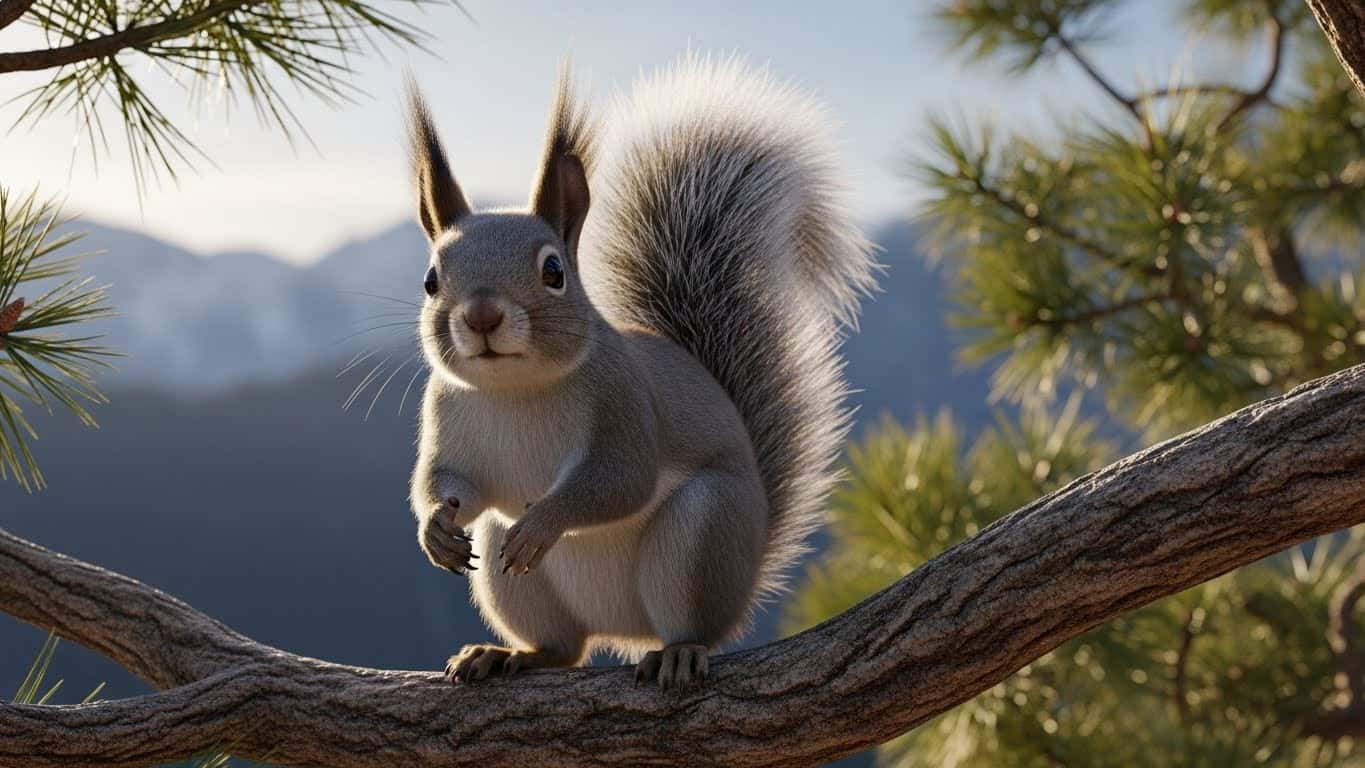
The mystery of the saber-tooth squirrel is a perfect example of how life sometimes imitates art. Many of us first met this frantic, acorn-obsessed creature in the Ice Age movies. We watched Scrat chase his elusive nut across cracking glaciers and shifting continents. For years, fans assumed he was purely a product of creative animation. However, a surprising discovery in 2011 changed that narrative forever.
At squirrelsinfo, we focus on modern squirrel behavior, but understanding their ancient history is just as fascinating. Whether you are curious about Scrat or the real prehistoric mammals that once roamed the earth, this guide covers everything you need to know.
Is the Saber-Toothed Squirrel Real?
The short answer is both yes and no. It depends on whether you are talking about the movie character or a biological species. For nearly a decade after the first Ice Age movie was released, the “saber-tooth squirrel” was considered entirely fictional. The creators of the film admitted they made him up to be a comedic mascot.
Then, paleontologists in Argentina uncovered something remarkable. They found the skull of a small mammal that looked shockingly like the animated character. This discovery blurred the lines between Hollywood imagination and scientific reality.
Scrat: The Pop Culture Icon
Scrat is officially known as a “saber-toothed squirrel” in the movie universe. He represents a persistent, high-energy critter living roughly 20,000 years ago. His design features two massive canine teeth and a bushy, fox-like tail. While he isn’t based on a specific fossil, he captured the world’s interest in prehistoric rodents.
The 2011 Discovery: Meet Cronopio dentiacutus
The real-life counterpart is a species called Cronopio dentiacutus. Scientists found its fossilized remains in Patagonia, Argentina. This animal lived about 100 million years ago, which is far older than the Ice Age. Despite the massive time gap, the physical resemblance to Scrat is undeniable. It had a long snout, large eye sockets, and most importantly, incredibly long, slender canine teeth.
Prehistoric Reality: What Did the Real Saber-Tooth Squirrel Look Like?
While the real Cronopio looked like a squirrel, it wasn’t actually a member of the squirrel family we see today. In the scientific world, it belongs to an extinct group called dryolestoids. These were primitive mammals that lived alongside dinosaurs.
Scientific Classification and Taxonomy
Modern squirrels belong to the family Sciuridae. However, Cronopio dentiacutus is more closely related to the ancestors of marsupials and placental mammals. It represents a branch of the mammalian family tree that eventually died out. Despite the lack of a direct genetic link, its body shape followed a familiar pattern. This is a great example of convergent evolution, where unrelated species develop similar traits to survive.
Physical Characteristics: Size and Weight
If you saw a real Cronopio today, you might mistake it for a small squirrel or a large shrew.
- Length: It measured about 4 to 6 inches long (excluding the tail).
- Weight: It likely weighed just a few ounces.
- Features: It had a very narrow snout and large eyes, suggesting it might have been active at night or in low-light environments.
The Mystery of the Long Canine Teeth
The most striking feature of both Scrat and Cronopio is the fangs. In the movies, Scrat uses his teeth like ice picks to climb glaciers. In reality, the purpose of these teeth in Cronopio remains a topic of debate. They were likely too fragile for heavy combat. Scientists believe they might have been used to pin down large insects or for social displays among their own kind.
Habitat and Life in the Late Cretaceous Period
To understand where the real saber-tooth squirrel lived, we have to travel back to the Late Cretaceous period. This was a world dominated by giants like Argentinosaurus.
Where Did the Saber-Toothed Squirrel Live?
The fossils were found in the Rio Negro province of Argentina. During the Cretaceous, this area was a lush floodplain with plenty of vegetation. It was a far cry from the frozen landscapes shown in the movies. The environment was warm, humid, and filled with diverse plant life and early flowering plants.
Diet and Survival: What Did They Actually Eat?
Unlike Scrat, who would do anything for an acorn, the real Cronopio was likely an insectivore. Its molar teeth were specialized for crushing the hard exoskeletons of bugs and beetles. While modern squirrels are famous for hoarding nuts, ancient mammals like these were more focused on high-protein sources to power their small, fast-moving bodies.
If you want to compare this to modern diets, you can read about what squirrels eat today to see how far they have come.
The Fossil Record and Extinction
Finding a small mammal fossil is incredibly rare. Small bones are fragile and often get destroyed over millions of years. This is why the discovery of Cronopio was such a major win for science.
When Was the Saber-Tooth Squirrel Discovered?
The first skulls were actually found in 2002, the same year the first Ice Age movie hit theaters. However, it took years of painstaking work to remove the hard rock surrounding the fossils. The species wasn’t officially named and described until 2011. The lead researcher, Guillermo Rougier, noted the funny coincidence between the discovery and the movie character.
Why and When Did They Go Extinct?
Cronopio and its relatives disappeared long before the famous Ice Age began. Most dryolestoids went extinct as modern mammal groups began to take over their ecological niches. Climate shifts and the massive extinction event that wiped out the dinosaurs also played a role. By the time the world cooled down and glaciers formed, these fanged critters were already ancient history.
Comparing the Saber-Toothed Squirrel to Modern Species
It is fun to look at a modern squirrel and imagine it with huge fangs. While no modern squirrel has “saber teeth,” they share some amazing survival traits with their prehistoric lookalikes.
Cronopio vs. Modern Tree Squirrels
Modern tree squirrels have evolved to be incredible acrobats. They have strong back legs and sharp claws for climbing. We often get asked do squirrels make nests in trees, and the answer is a big yes. Ancient mammals like Cronopio likely spent more time on the ground or in low bushes. Their skeletons suggest they were better at scurrying through leaf litter than leaping between branches.
Evolution of the Squirrel Family Tree
The first “true” squirrels didn’t appear until about 36 million years ago. This means there is a gap of over 60 million years between the real saber-tooth creature and the first actual squirrel. Evolution often reuses successful designs. Small, furry bodies with long tails are clearly a winning strategy for survival across different eras.
Common Questions About the “Ice Age” Squirrel
Because of the movies, people have a lot of specific questions about these animals. Here are the facts behind the most common queries.
Was Scrat based on a real fossil? No. The movie creators designed Scrat before the Cronopio fossil was ever described in scientific journals. It was a complete coincidence that a similar-looking animal actually existed.
Did the saber-tooth squirrel live with mammoths? In the movies, yes. In reality, the “saber-tooth squirrel” (Cronopio) lived with dinosaurs 100 million years ago. Mammoths didn’t appear until about 5 million years ago.
How big was the real saber-tooth squirrel? It was very small. You could easily hold one in the palm of your hand. It was much smaller than the version seen on the big screen.
Are there any “fanged” squirrels today? While no squirrel has tusks like a walrus, some modern deer and even some primates have elongated canines. However, in the rodent world, the closest you get are long, sharp incisors for gnawing on hard nuts.
Final Thoughts on Prehistoric Squirrels
The story of the saber-tooth squirrel reminds us that nature is full of surprises. Sometimes the things we imagine in movies have a grain of truth hidden in the earth. While Scrat is a fun character, the real Cronopio dentiacutus tells a deeper story about how mammals survived in the shadow of dinosaurs.
At squirrelsinfo, we love exploring these connections between the past and present. If you enjoyed learning about these ancient critters, check out our guide on where squirrels sleep to see how their modern descendants stay safe today. Understanding the history of these animals makes watching them in your backyard even more rewarding.
Frequently Asked Questions
Yes and no. A squirrel exactly like Scrat from the Ice Age movies never existed. However, a prehistoric mammal named Cronopio dentiacutus was discovered in 2011. It had long canine teeth and a snout that looked remarkably like the movie character.
The real-life version, Cronopio, went extinct about 90 to 100 million years ago. This happened during the Cretaceous period, long before the famous Ice Age or the appearance of woolly mammoths.
Unlike the nut-obsessed character on screen, the real animal was likely an insectivore. Its teeth were designed to pierce the hard shells of beetles and other ancient bugs.
Fossils were discovered in the Rio Negro province of Patagonia, Argentina. During its time, this area was a warm, tropical floodplain rather than a frozen tundra.
It was a very small creature. Most experts estimate it was about the size of a modern-day meadow vole or a very small squirrel. It would have weighed only a few ounces.
The most famous “real” version is known as Cronopio dentiacutus. It belongs to an extinct group of mammals called dryolestoids.
Yes, there are several craft beers named after the creature, most notably the “Saber-Toothed Squirrel” by Smog City Brewing. It is an American Amber Ale named as a nod to the famous prehistoric icon.
While it had a long snout and small body that might look rat-like, it was not a rodent. It lived tens of millions of years before the first rats or squirrels ever evolved.