Do Squirrels Eat Apples?
- May 28, 2025
- by
- John Miller
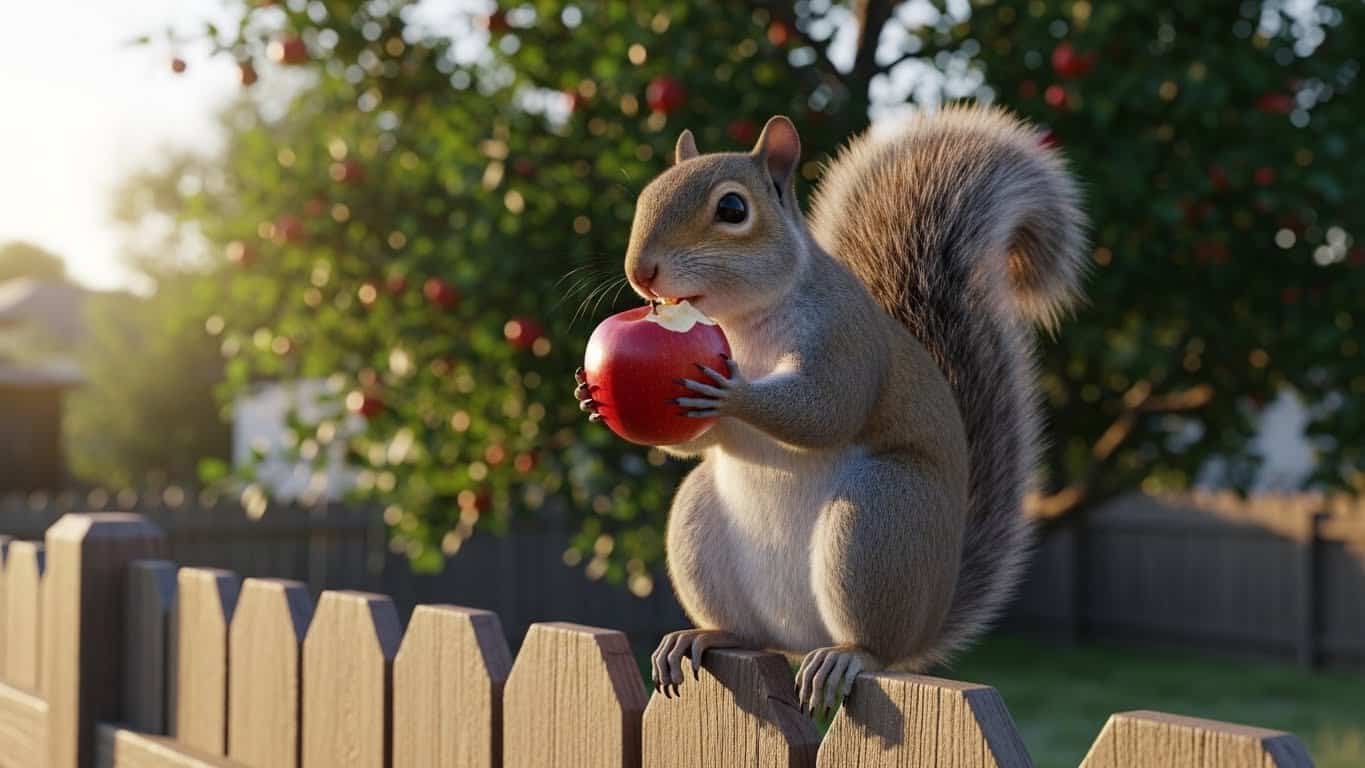
If you’ve ever watched a squirrel carrying something round and red across your yard, you’ve probably wondered if squirrels eat apples. The short answer is yes. Squirrels do eat apples, and many species enjoy them when they are available. Apples are not a natural staple food for squirrels, but they are a welcome seasonal treat, especially in areas where apple trees grow in gardens, parks, and forests.
As someone who has spent years observing squirrel behavior in woodlands and suburban neighborhoods, I’ve seen firsthand how quickly squirrels discover fruit trees. Understanding how apples fit into a squirrel’s diet helps prevent garden damage, supports safe wildlife feeding, and clears up common myths about what squirrels can and cannot eat.
This guide explains how different squirrels eat apples, whether apples are safe for them, how apples affect squirrel behavior, and what to do if apples attract too many squirrels to your yard.
Why Squirrels Are Drawn to Sweet Fruits
Squirrels are natural foragers. Their daily routine revolves around searching for food that provides energy and hydration. In the wild, most squirrels rely on nuts, seeds, acorns, tree buds, fungi, and occasional fruits. Apples fall into the fruit category, offering moisture and natural sugars.
Sweet fruits provide quick energy. During active seasons such as spring and fall, squirrels burn a lot of calories climbing trees, escaping predators, and gathering food. When apples are in season, squirrels recognize them as an easy energy source. This explains why backyard apple trees often become busy feeding spots.
Fruit also helps with hydration. In dry weather, squirrels may seek out juicy foods to supplement water intake. Apples, with their high water content, can meet that need.
Do All Squirrel Species Eat Apples?
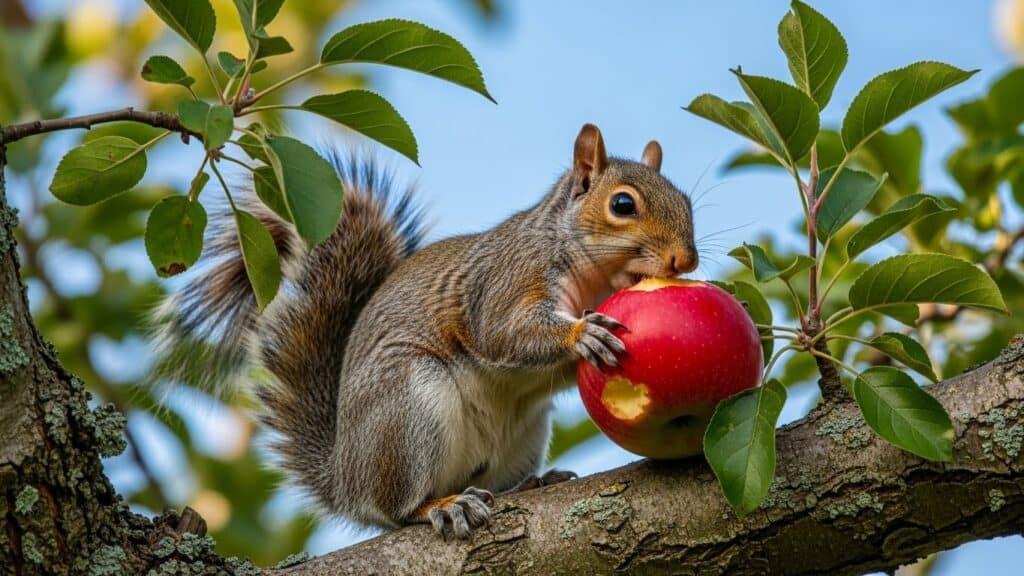
Not all squirrels have identical diets, but most species will eat apples if given the chance.
Tree squirrels
Eastern gray squirrels and fox squirrels are the most common fruit visitors in North America. These tree-dwelling species readily climb apple trees, nibble on hanging fruit, or collect fallen apples. Their sharp incisors allow them to chew through apple skin with ease.
Ground squirrels
Ground squirrels spend more time on open land. They usually eat seeds, grasses, and insects, but they will eat fallen apples when available. In orchards and rural gardens, ground squirrels are frequent visitors during apple season.
Flying squirrels
Flying squirrels prefer softer foods such as berries, fungi, and tree sap. Apples are not a top choice, but they may nibble on small pieces or fallen fruit at night.
Abert’s squirrel
Abert’s squirrels live in forested regions, especially in the southwestern United States. Their primary diet includes tree bark, pine seeds, and fungi. Apples are not common in their natural habitat, but if apple trees exist near forest edges or cabins, they will investigate and sample the fruit.
No matter the species, squirrels follow opportunity feeding. If apples are easy to reach, squirrels will eat them.
Are Apples Safe for Squirrels to Eat?
Apples are safe for squirrels in small amounts. They are not toxic and do not cause immediate harm. However, apples should be treated as a snack, not a main food source.
Nutritional value of apples
Apples provide:
- Natural sugars for quick energy
- Water for hydration
- Small amounts of fiber
Apples do not provide enough protein or fat for a balanced squirrel diet. That’s why squirrels still rely mainly on nuts and seeds for long-term energy storage.
Risks of too many apples
Overeating apples can cause:
- Upset stomach
- Loose droppings
- Poor nutrition balance if apples replace nuts
In backyard feeding situations, too much fruit can also encourage dependency on human food sources.
Rotten or moldy apples
Never allow squirrels to eat spoiled apples. Mold on fruit can contain toxins that harm wildlife. Fallen apples that sit on damp ground often develop hidden mold. Removing rotten fruit from yards protects both squirrels and other animals.
Can Squirrels Eat Apple Seeds?
Apple seeds contain trace amounts of a compound that can release cyanide when crushed. The amount in a few seeds is extremely small. A squirrel eating occasional apple seeds is unlikely to be harmed.
The real concern comes from large quantities. It is best to remove seeds if you are intentionally feeding apples to backyard squirrels. This small step reduces any unnecessary risk.
In natural settings, squirrels usually chew around seeds rather than consuming many at once, so problems are rare.
How Squirrels Find and Store Apples
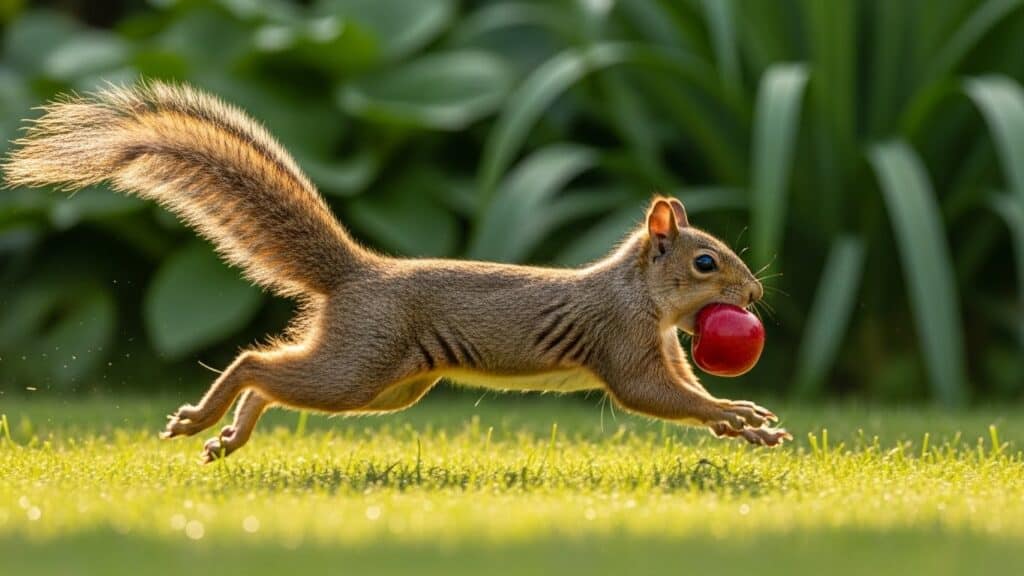
Squirrels rely on excellent memory and strong smell to locate food sources. Once an apple tree produces fruit, squirrels quickly learn its location. They will visit daily until the season ends.
Squirrels sometimes carry apples away to safer feeding spots. Smaller apples may be transported whole. Larger apples are eaten in place. Some squirrels even take bites and return later.
Food storage is another key behavior. While squirrels are better known for caching nuts, they may also hide pieces of fruit short-term, especially in cool weather. This connects closely to nesting and shelter habits.
You can learn more about nesting behavior to understanding how squirrels make nest explains why they often carry food toward tree cavities or leafy dreys.
Seasonal Apple Feeding Habits
Apples ripen in late summer and fall. This timing is important in the squirrel calendar.
During fall, squirrels enter peak food collection season. They gather high-fat foods to prepare for colder months. Apples become a bonus food source during this period.
In winter, food becomes scarce. Squirrels rely on stored nuts and seeds. Apple feeding declines once fruit season ends, but early fallen apples in autumn help squirrels build energy reserves.
Seasonal behavior also connects to winter survival patterns. You can read more about squirrels hibernate.
While most tree squirrels do not truly hibernate, their activity drops in cold weather, making fall feeding crucial.
Where Squirrels Eat and Store Their Food
Squirrels choose feeding spots that offer safety from predators. Common places include:
- Tree branches
- Fence tops
- Roof edges
- Tree cavities
They often carry apples to elevated locations before eating. This keeps them away from ground predators such as cats, foxes, and raccoons.
Sleeping and feeding areas are often close together. This reduces travel energy and lowers risk. To understand where squirrels rest between feeding trips.
Knowing where squirrels sleep helps explain why food trees near homes attract repeat visits.
Do Apples Attract Squirrels to Gardens?
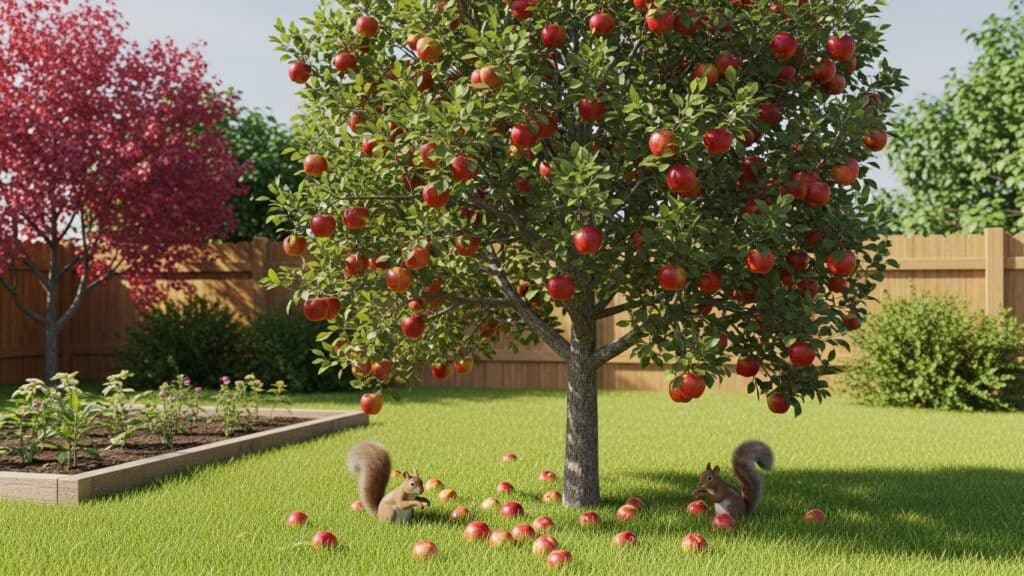
Yes, apple trees are strong squirrel attractors. In the United States, suburban yards with fruit trees often see an increase in squirrel activity during fruiting months.
Common garden problems include:
- Half-eaten apples on branches
- Dropped fruit on lawns
- Digging near roots
- Chewed tree bark in some cases
If you grow apples, regular fruit collection helps. Picking ripe apples promptly reduces attraction. Clearing fallen fruit daily also lowers squirrel visits.
Netting fruit trees can protect harvests, but it must be secured tightly to avoid trapping wildlife.
Should You Feed Apples to Backyard Squirrels?
Many people enjoy feeding wildlife. Apples can be part of that experience if done carefully.
Safe feeding tips
- Offer small apple slices
- Remove seeds
- Place on clean feeding platforms
- Limit frequency to avoid dependency
What to avoid
- Never offer spoiled fruit
- Do not leave food overnight (attracts pests)
- Avoid feeding near roads
Feeding should support observation, not replace natural foraging. On squirrelsinfo, we always encourage responsible wildlife viewing that keeps animals wild and healthy.
Common Problems Caused by Apple Feeding
Feeding apples or having apple trees can lead to:
- Increased squirrel numbers in small areas
- Competition with birds at feeders
- Chewing on wooden structures
- Soil digging near gardens
Most of these issues can be managed with proper yard habits, timely fruit cleanup, and offering alternative bird feeders designed to reduce squirrel access.
Quick Answers to Common Questions
Yes. Wild squirrels eat apples when they grow in forests, orchards, or backyard trees.
Young squirrels should not eat fruit until weaned and older. Apples are not suitable for very young squirrels.
Fresh apples in small amounts are safe. Rotten apples or too many apples can cause problems.
Yes. Fruit trees and feeding stations both increase squirrel visits.
Final Thoughts from Field Experience
Watching squirrels interact with apple trees is one of the simplest ways to observe natural foraging behavior. Apples are not essential to a squirrel’s diet, but they play a seasonal role when available. The key is balance. In the wild, squirrels regulate their own intake. In backyards, human habits shape squirrel behavior more than the fruit itself.
At squirrelsinfo, our goal is to help readers understand wildlife through real behavior, not guesswork. When you know why squirrels eat apples, how they store food, and where they rest, managing yard interactions becomes much easier.
With clean gardens, thoughtful feeding, and respect for natural habits, humans and squirrels can share outdoor spaces without conflict.
You may also Like
Can Squirrels Eat Chocolate? A Wildlife Expert’s Warning

