
Diet & Feeding
What Do Squirrels Eat in Winter? Foods, Caching, and Survival
Tree squirrels stay active all winter. They do not hibernate. Instead, they live mostly on nuts and seeds they buried during the fall — mainly acorns, hickory nuts, and walnuts — and fill the gaps with fungi, tree bark, buds, and whatever else they can find. When they are out in winter, they spend most of their time on the ground, digging up food they stored months earlier.
Do Squirrels Hibernate in Winter?
No. Tree squirrels such as gray squirrels and fox squirrels do not hibernate. The Indiana Department of Natural Resources states this plainly: squirrels do not hibernate, but they do become less active in winter to reduce their energy demands. On cold or stormy days they stay in the den and cut back activity to save energy, then come out to feed when the weather eases.
This is different from ground squirrels, chipmunks, and marmots, which do sleep through the winter in underground burrows. If you want the full picture, read our guide on do squirrels hibernate.
Staying active all winter means a squirrel must keep finding food in the hardest season of the year. That is why the fall matters so much. A squirrel's winter diet is mostly decided before winter even starts.
The Main Winter Foods
In fall and winter, the major food source for gray and fox squirrels is hard mast — the nuts and seeds of hardwood trees. Oklahoma State University Extension puts it simply: in fall and winter, hard mast such as pecans, acorns, and hickory nuts is the main food, and the amount of mast a woodland produces largely decides how many squirrels it can support.
Here are the foods that carry squirrels through winter:
| Winter food | What it is | Why it matters in winter |
|---|---|---|
| Acorns | Nuts of oak trees | The single most important winter food; stores well through winter |
| Hickory nuts | Nuts of hickory trees | High-energy food, eaten fresh in fall and recovered from caches in winter |
| Black walnuts | Nuts of black walnut trees | A staple food that keeps well in storage |
| Beechnuts and butternuts | Nuts of beech and butternut trees | Part of the hard mast mix, where those trees grow |
| Pecans | Nuts of pecan trees | An important winter food in the southern part of the gray squirrel's range |
| Fungi and mushrooms | Mushrooms and truffles | Available in fall and still found in winter; a notable part of the winter diet |
| Tree bark and cambium | The inner bark layer of trees | Eaten when nuts run low, especially in late winter |
| Tree buds | Early buds of maple, elm, and other trees | A key late-winter and early-spring food |
| Leftover seeds and berries | Maple seeds, dogwood seed, pine seeds, Osage orange seed | Gleaned from trees and the ground through winter |
| Birdseed and farm crops | Seed from feeders, corn, soybeans | Easy calories near houses and fields |
The exact mix depends on where the squirrel lives. In Oklahoma, for example, the winter menu also includes pecans, sweetgum, hazelnuts, and soybeans, according to Oklahoma State University Extension. In the eastern forests, acorns, hickory nuts, and walnuts dominate. The pattern is the same everywhere: nuts first, everything else as backup.
How Squirrels Prepare: The Fall Caching Season
A squirrel does not find most of its winter food in winter. It buries it in the fall. This behavior is called caching, and it is the heart of winter survival.
Gray squirrels are scatter-hoarders. They bury nuts one at a time in many separate shallow holes spread across their home range, rather than piling them in one place. The Maryland Department of Natural Resources reports that a gray squirrel can make hundreds of caches, most nuts buried at the surface with few more than a quarter of an inch deep. Spreading food out this way means a thief or a flood cannot wipe out the whole winter supply at once.
Finding those nuts again is a feat of smell. The Indiana Department of Natural Resources says squirrels find buried nuts, or caches, by sense of smell, not memory. The Connecticut Department of Energy and Environmental Protection agrees: the winter food supply is usually recovered as needed, by sniffing the ground until a buried nut is found. Maryland adds that a gray squirrel can smell buried nuts under a foot of snow, and when the snow is deep it tunnels under the snow to get closer to the scent.
Not every buried nut gets eaten. Maryland reports that about 85 percent of the nuts may be recovered, while the rest occasionally germinate and grow into new trees. That is why squirrels are sometimes called the forest's gardeners: the nuts they forget become the next generation of oak and hickory trees. The Audubon Community Nature Center makes the same point — seeds left behind in caches are free to grow into new plants, which helps the whole ecosystem.
Squirrels also prepare their bodies and homes for the cold. They spend more time in tree cavities, which shelter them better than leaf nests in harsh weather, and family groups may share a den through the winter. The second litter of the year often stays with its mother over the winter, according to Maryland's wildlife agency.
What One Study Found in Squirrel Stomachs
General lists are useful, but one study measured the winter diet directly. Researchers at Virginia Tech examined 113 gray squirrel stomachs collected through the year in Montgomery County, Virginia, and identified 78 different food items. For winter, the results were:
- Red oak acorns: 36 percent of the winter diet
- Combinations of acorns, hickory nuts, and walnuts: 22 percent
- Fungi: 16 percent
- Black walnuts: 10 percent
The study classified hickory nuts, white oak acorns, and fungi as preferred foods, and red oak acorns and black walnuts as staple foods. Tree buds, by contrast, were classified as emergency foods — eaten when little else is available. That matches what the state wildlife agencies describe: nuts first, buds when the nuts run out.
These numbers come from one county in Virginia, so they describe that place and time, not every squirrel everywhere. But they confirm the pattern in unusual detail: winter is an acorn-and-nut season, with fungi as the main supplement.
How Much Food Does One Squirrel Need?
Winter is expensive for a squirrel's body. Staying warm burns energy, and every trip out of the den costs more. Oklahoma State University Extension reports that squirrels consume an average of 1.5 pounds of mast (dry weight) per week, and that it takes 30 to 40 pounds of mast to sustain one squirrel through the breeding season.
That is why a bad acorn year is a hard year. In Oklahoma, hard mast trees often produce in a five-to-seven-year cycle, with one excellent crop, one failure, and several poor-to-moderate years in between, according to the same Extension fact sheet. When a mast crop fails, competition for food becomes intense, and younger squirrels are often pushed out of their home ranges by adults — which raises mortality among the young.
The Connecticut wildlife agency describes the same link from the other side: during successive years of good acorn production, squirrel populations may reach high levels, but if food supplies are low, the population may decrease substantially. A squirrel's winter is only as good as the previous fall's nut crop.
Gray Squirrels vs. Fox Squirrels in Winter
The two common tree squirrels of the eastern and central United States eat much the same winter diet, but they differ in size and habits. Adult gray squirrels weigh 1 to 1.5 pounds, while adult fox squirrels weigh 1.5 to 2.5 pounds, according to Oklahoma State University Extension. Both rely on hard mast in fall and winter.
Their winter foods overlap closely. Oklahoma State's seasonal table lists the same core winter foods for both species: acorns, hickory nuts, black walnuts, and Osage orange seed, with elm, soybeans, magnolia, pecans, sweetgum, hazelnut, dogwood seed, pine seeds, hornbeam, hop-hornbeam, and bark rounding out the list.
Where they differ is shelter. Den sites in tree cavities are preferred by both species for protection from weather, but fox squirrels are more likely than gray squirrels to use leaf nests in winter, including to raise their young. Either way, a dry, sheltered den matters as much as food: a squirrel that stays warm needs fewer calories to survive the night.
Late Winter: The Hungry Gap
The hardest weeks are not December but February and March. By then the fall caches are running low, the ground may be frozen or snow-covered, and spring has not yet arrived. This is when squirrels turn to the emergency foods — bark, buds, and the cambium layer under the bark.
The Indiana Department of Natural Resources describes the shift: from February to May, gray squirrels forage on early tree buds and spring seeds until spring greens emerge. That is also when squirrels are sometimes seen stripping bark from the upper branches of young trees. The same agency notes this bark-stripping happens mostly in early spring and early fall, when squirrels seek the sodium in sap flowing through the branches.
Late winter is also breeding season. Gray squirrels mate in late winter and spring, and the young of the early litter are born in February or March, usually in a tree cavity. Food demand stays high just as the stored supply runs low — one more reason the fall nut crop matters so much.
Should You Feed Squirrels in Winter?
Many people want to help squirrels through the cold months, and a feeder can help — but it is not required. Wild squirrels survived winters long before backyard feeders existed, and their diet is built around natural foods.
General information only — not veterinary or professional wildlife advice. For a sick, injured, or orphaned animal, contact a licensed wildlife rehabilitator or veterinarian.
If you do offer food, keep it simple and close to what squirrels eat naturally: nuts in the shell and seeds, offered in small amounts. Our guide to the best food for squirrels covers suitable foods in detail. Avoid putting out large piles of food every day, which can draw more animals than your yard can handle and can make squirrels dependent on one spot.
Also remember that squirrels and birds share the same feeders. Squirrels are notorious for raiding bird feeders, and a feeder full of seed will attract them as surely as it attracts birds. If your goal is feeding birds, not squirrels, see our guide on how to keep squirrels out of bird feeders.
Water matters too. Oklahoma State University Extension notes that both fox and gray squirrels will readily drink free-standing water, although they generally meet their daily water needs from dew and the moisture in their food. A shallow dish of fresh water, kept free of ice, is a simple way to help in freezing weather.
Final Thoughts
A squirrel's winter diet is a story of planning. The nuts buried one by one in the fall, the fungi gathered as a supplement, the buds and bark that carry a squirrel through February — all of it is how an animal that never hibernates survives months when almost nothing grows. The next time you see a squirrel digging in the snow, it is probably not searching at random. It is collecting on a deposit it made months ago, in a bank that smells like acorns.
If you want the wider picture of what squirrels eat all year, start with what squirrels like to eat and our guide to do squirrels eat acorns. To understand where they shelter while they wait out the cold, see where do squirrels sleep and do squirrels make nests.
Frequently Asked Questions
Do squirrels hibernate in winter?
No. Tree squirrels such as gray and fox squirrels stay active all winter, though they become less active and spend more time resting in their dens during cold weather, according to the Indiana Department of Natural Resources.
What do squirrels eat in winter?
Mostly nuts and seeds buried in the fall — acorns, hickory nuts, black walnuts, beechnuts, and pecans — plus fungi, bark, tree buds, and leftover seeds. In one Virginia study of 113 gray squirrel stomachs, red oak acorns made up 36 percent of the winter diet.
How do squirrels find buried nuts under snow?
By smell. The Maryland Department of Natural Resources reports that a gray squirrel can smell buried nuts under a foot of snow, and it will tunnel under deep snow to get closer to the scent.
Do squirrels eat birdseed in winter?
Yes. Squirrels readily eat seed from bird feeders and will return again and again once they know where to find it. If you want to feed birds without feeding squirrels, use a pole-mounted feeder with a baffle, placed away from trees and branches.
Should I feed squirrels in winter?
You can, but it is not required — wild squirrels are built to survive winter on stored nuts and natural foods. If you offer food, keep it to small amounts of nuts in the shell and seeds. For a sick, injured, or orphaned squirrel, contact a licensed wildlife rehabilitator or veterinarian.
What do squirrels eat when the ground is frozen?
They dig up the nuts they buried in the fall, eat fungi and bark, and turn to tree buds. From February to May, gray squirrels forage on early tree buds and spring seeds until spring greens emerge, according to the Indiana Department of Natural Resources.
Sources
- Indiana Department of Natural Resources, Division of Fish & Wildlife — “Gray Squirrel” (food habits, winter activity, caching by smell, February–May buds). https://www.in.gov/dnr/fish-and-wildlife/wildlife-resources/living-with-wildlife/gray-squirrel/
- Maryland Department of Natural Resources, Wildlife and Heritage Service — “Eastern Gray Squirrel” (diet, fall storage, hundreds of caches, about 85% recovery, smelling nuts under snow, lifespan). https://dnr.maryland.gov/wildlife/pages/plants_wildlife/easterngraysquirrel.aspx
- Connecticut Department of Energy and Environmental Protection — “Gray Squirrel” (mast foods, fall burying, recovery by sniffing, population changes with acorn crops, feeder placement). https://portal.ct.gov/deep/wildlife/fact-sheets/gray-squirrel
- Oklahoma State University Extension — “Gray and Fox Squirrels” (fall/winter hard mast, 1.5 pounds of mast per week, 30–40 pounds per breeding season, seasonal food table, water needs, den sites). https://extension.okstate.edu/fact-sheets/gray-and-fox-squirrels
- Virginia Tech (VTechWorks) — “A survey of the food habits of the gray squirrel (Sciurus carolinensis) in Montgomery County, Virginia” (113 stomachs, 78 food items; winter diet percentages). https://vtechworks.lib.vt.edu/items/1af42a88-32cf-4275-8578-6492544c82a5
- Audubon Community Nature Center — “What a Cache!” by Charlotte Schmaltz (caching behavior, long-term winter stores, unrecovered seeds growing into new plants). https://auduboncnc.org/caching/
Sources and further reading
- Indiana Department of Natural Resources, Division of Fish & Wildlife — “Gray Squirrel”
- Maryland Department of Natural Resources, Wildlife and Heritage Service — “Eastern Gray Squirrel”
- Connecticut Department of Energy and Environmental Protection — “Gray Squirrel”
- Oklahoma State University Extension — “Gray and Fox Squirrels”
- Virginia Tech (VTechWorks) — “A survey of the food habits of the gray squirrel (Sciurus carolinensis) in Montgomery County, Virginia”

About the author
Harry Brian
Wildlife Content Writer and Editorial Contributor
Harry Brian is a wildlife content writer at SquirrelsInfo. He creates and updates practical guides about squirrel behavior, diet, species, habitat, life cycle, and humane coexistence. His goal is to turn complex wildlife topics into clear, useful information for homeowners, gardeners, and curious readers.
Full profile and articles →Keep exploring
Related guides
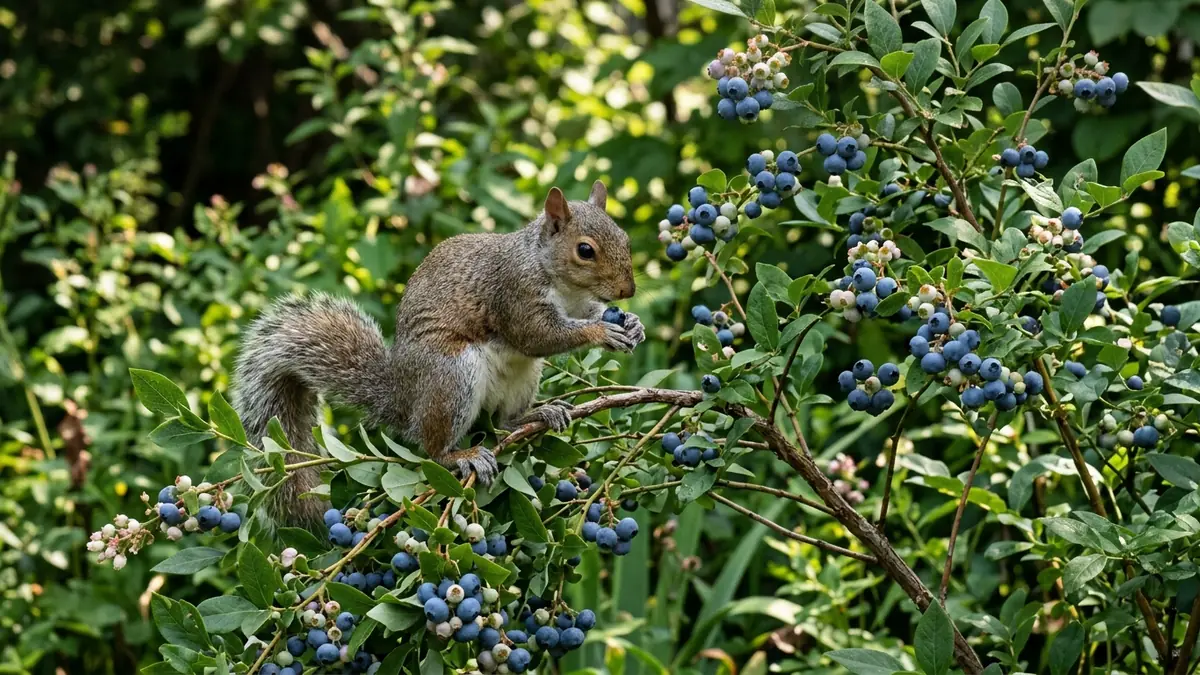
Do Squirrels Eat Blueberries? Bush Damage and Protection
Squirrels eat berries and may sample cultivated blueberries. A direct sighting matters because birds, chipmunks, and other wildlife can leave similar missing fruit.
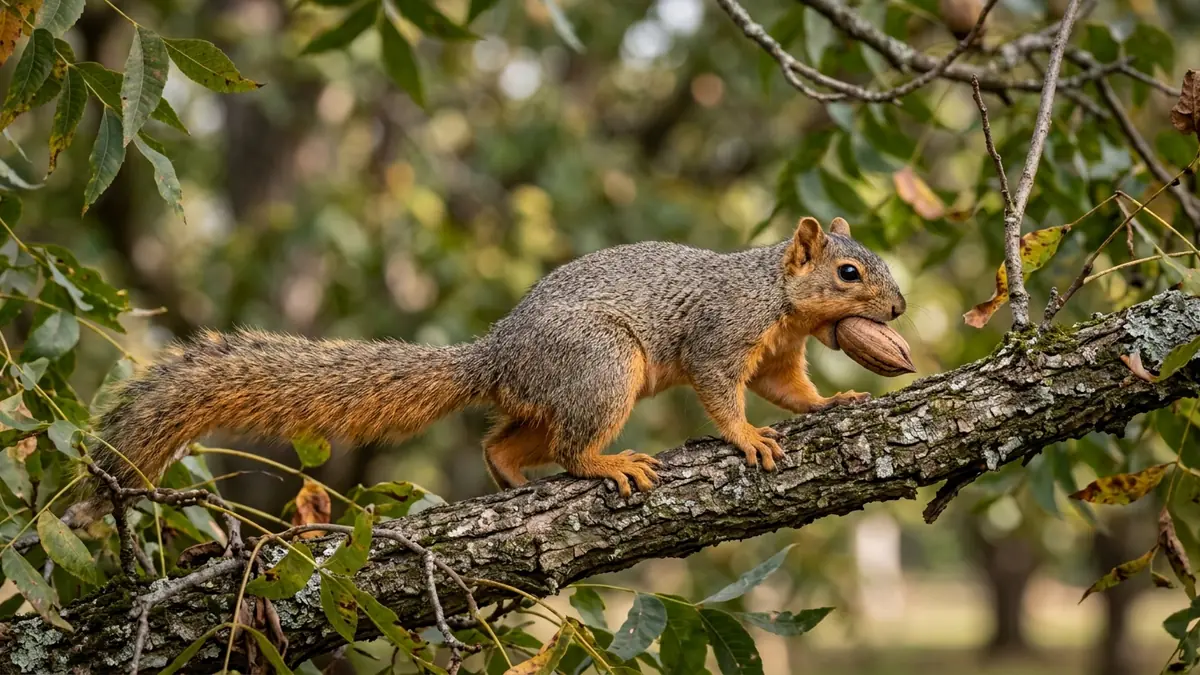
Do Squirrels Eat Pecans? Natural Food and Orchard Protection
Pecans are a natural hard-mast food for gray and fox squirrels. Squirrels eat, carry, and cache them, which can create conflict in home and commercial orchards.
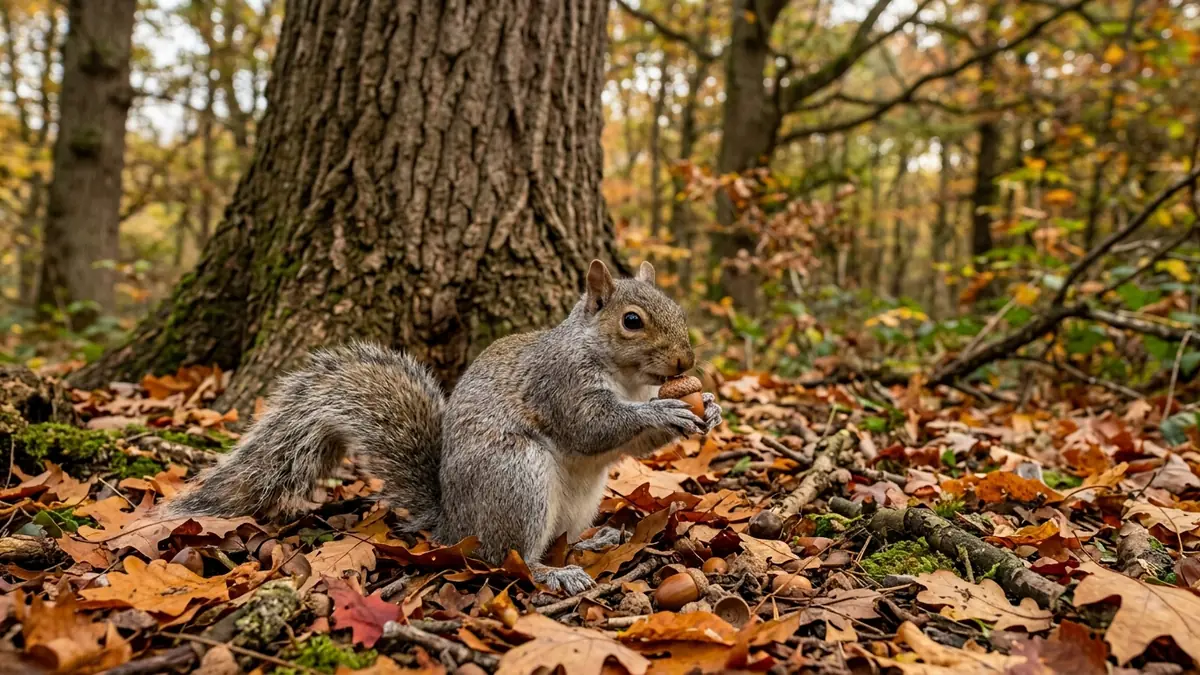
Do Squirrels Eat Acorns? Why This Natural Food Matters
Acorns are a major natural food for gray, fox, and other squirrels. They eat them, carry them, and cache them, linking squirrel survival with oak woodland ecology.
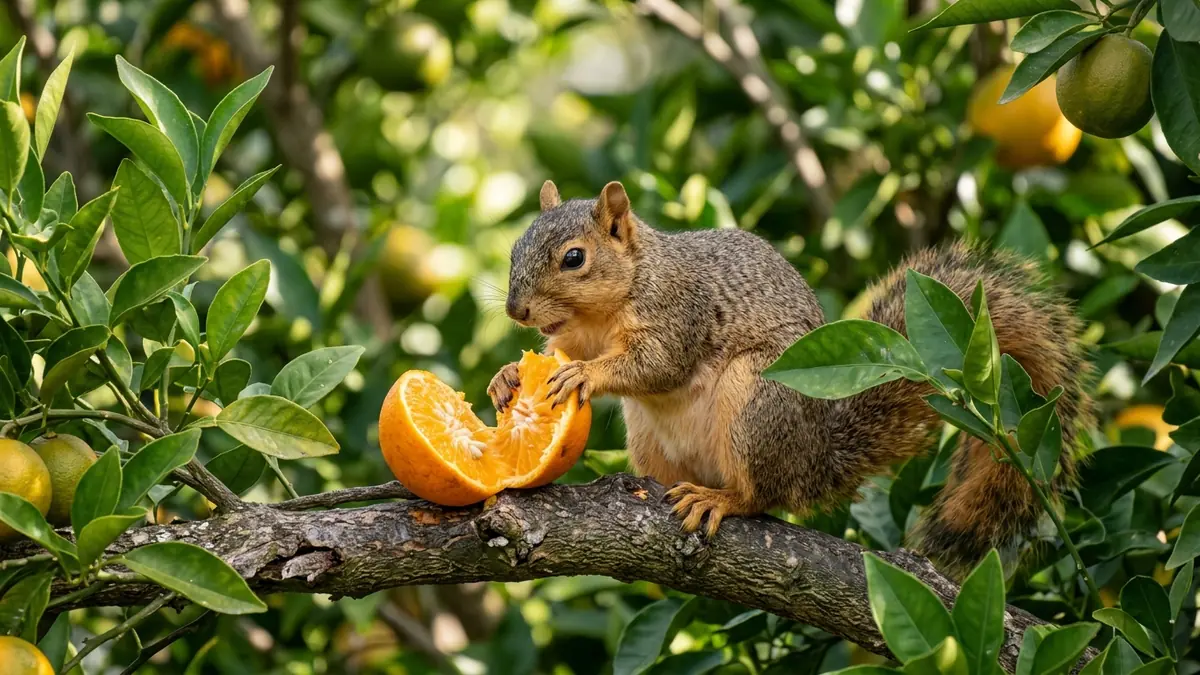
Do Squirrels Eat Oranges? Citrus Trees, Pulp, and Peel
Tree squirrels do eat oranges and can damage citrus crops. They often target the juicy pulp, although the exact feeding marks vary by species and other visitors.