
Diet & Feeding
What Do Squirrels Eat?
Squirrels are omnivores that eat mostly plant food: nuts, seeds, fruits, and berries, with fungi, tree buds, bark, and sap as extras. When plant food is scarce they also eat insects, bird eggs, and nestlings. Gray squirrels — the most common tree squirrel in North America — build their diet around hard mast such as acorns, hickory nuts, and walnuts.
Squirrels Are Omnivores
An omnivore eats both plant and animal food, and squirrels fit that description. But plants come first by a wide margin. The Indiana Department of Natural Resources describes the gray squirrel's principal diet as hard mast, wild berries, and fruits, with fungi, bird eggs, nestlings, and insects eaten only occasionally. The Maryland Department of Natural Resources gives the same picture: a diet of seeds, nuts, and berries, with insects, juvenile birds, bird eggs, and amphibians eaten when the usual food is scarce.
That "when food is scarce" detail matters. A squirrel is not a hunter by habit. Animal food is a backup, eaten when nuts and fruit run short — not the core of the diet. Most of what a squirrel eats on a normal day grows on a tree.
This guide focuses on the tree squirrels most readers see: gray squirrels and fox squirrels in the eastern and central United States, with red squirrels covered where their diet differs. Ground squirrels, which live in burrows and eat more grasses and roots, are a different story.
The Core Diet: Nuts and Seeds
Nuts and seeds — called hard mast by wildlife biologists — are the foundation of the squirrel diet. The Maryland Department of Natural Resources lists the usual mix: acorns, hickory nuts, walnuts, beechnuts, pine seeds, and maple samaras (the winged seeds of maple trees). The Indiana Department of Natural Resources adds wild cherries, tulip poplar cones, and dogwood and sassafras berries to the late-summer list. Connecticut's wildlife agency names acorns, hickory nuts, beechnuts, and butternuts as the main mast foods, along with berries, mushrooms, and maple seeds.
Oklahoma State University Extension states it plainly: in fall and winter, the major food source for gray and fox squirrels is hard mast such as pecans, acorns, and hickory nuts. The amount of mast a woodland produces largely decides how many squirrels it can support — squirrel numbers rise and fall with the nut crop.
How much does one squirrel actually eat? Oklahoma State University Extension reports that squirrels consume an average of 1.5 pounds of mast (dry weight) per week, and that it takes 30 to 40 pounds of mast to sustain one squirrel through the breeding season. That is a lot of nuts for an animal that weighs about a pound and a half.
Not all nuts are equal in a squirrel's eyes. Acorns are the single most important food for gray squirrels across much of their range, and they store well through winter. Hickory nuts and black walnuts are high-energy foods eaten fresh in fall and recovered from buried caches in winter. Pecans matter most in the southern part of the gray squirrel's range, where pecan trees grow. Beechnuts and butternuts fill out the mix where beech and butternut trees are common.
For a closer look at the most important nut of all, read our guide on do squirrels eat acorns.
Fruits, Berries, and Other Soft Foods
When nuts are not in season, squirrels turn to soft mast — fruits and berries. The Maryland wildlife agency lists wild grapes and American holly berries among the gray squirrel's foods, along with the buds of maple, tulip poplar, flowering dogwood, and black cherry in spring. Indiana adds wild cherries and the berries of dogwood and sassafras in late summer.
Oklahoma State University Extension's seasonal table shows how the menu shifts. In spring, squirrels eat oak buds and flowers, maple buds and flowers, elm flowers, and magnolia. In summer, the list turns to hickory nuts, black walnuts, acorns, mulberries, grapes, blackberries, black cherry fruit, and maple seeds. Important soft-mast producers in Oklahoma include mulberry and blackberry, with maple, black gum, Osage orange, black cherry, and grape also listed as good food sources.
Garden fruit is on the menu too. Squirrels eat apples, pears, and other orchard fruit when they can reach it, and they are well known for raiding vegetable gardens. Our guides cover the specific foods readers ask about most: do squirrels eat apples, do squirrels eat carrots, do squirrels eat bananas, do squirrels eat tomatoes, do squirrels eat oranges, do squirrels eat pecans, and do squirrels eat blueberries.
Fungi, Buds, Bark, and Sap
Fungi are a bigger part of the squirrel diet than most people expect. Indiana lists fungi among the foods gray squirrels eat occasionally, and Connecticut names mushrooms directly. Red squirrels take it further: the University of Michigan's Animal Diversity Web reports that red squirrels eat a wide variety of mushrooms, including at least 45 species in the Cascade Mountains alone. Mushrooms also help spread the fungi that young trees need to grow, because squirrels carry fungal spores in their droppings and in the caches they forget.
Tree buds are a spring food. From February to May, gray squirrels forage on early tree buds and spring seeds until spring greens emerge, according to Indiana's wildlife agency. Maryland lists maple, tulip poplar, flowering dogwood, and black cherry buds as spring foods. Buds are also an emergency food: when nuts run low in late winter, buds are what squirrels fall back on.
Bark and sap have a surprising reason behind them. Gray squirrels strip bark from the upper branches of trees in early spring and early fall, and Indiana's wildlife agency explains why: the squirrels need sodium, and sap flowing in spring and fall contains higher concentrations of it. The squirrels peel back the thinner bark on younger branches to reach the sodium-rich sap. The same sodium need explains why squirrels sometimes chew on plywood glue and electric wire insulation — both can contain sodium. In the wild, bark is a normal, if minor, part of the diet; the inner bark layer, called cambium, is eaten in winter when little else is available.
Animal Foods: Insects, Eggs, and More
Yes, squirrels eat meat — but rarely, and only as a supplement. Indiana's wildlife agency lists insects, bird eggs, and nestlings as occasional foods. Maryland agrees, and adds amphibians to the list, eaten when the usual plant food is scarce. Oklahoma State University Extension's seasonal table lists insects and bird eggs among spring and summer foods.
This is the part of the squirrel diet that surprises people, and it is worth putting in proportion. A squirrel spends most of its day eating nuts, seeds, and fruit. Insects are a small protein bonus, and eggs or nestlings are taken when a squirrel happens across a nest — not something it hunts for all day. Our guides go into detail on do squirrels eat bird eggs, do squirrels eat birds, and do squirrels eat meat.
How the Diet Changes Through the Seasons
A squirrel's menu follows the trees. Oklahoma State University Extension's seasonal table gives the clearest picture of that cycle:
| Season | Main foods |
|---|---|
| Spring | Oak buds and flowers, maple buds, flowers and seeds, elm flowers, fungi, bulbs, insects, bird eggs |
| Summer | Hickory nuts, black walnuts, acorns, mulberries, grapes, blackberries, black cherry fruit, maple seeds, pine seed, fungi, insects |
| Fall | Acorns, hickory nuts, black walnuts, pecans, grapes, maple seed, dogwood seed, pine seed, fungi, corn seed |
| Winter | Acorns, hickory nuts, black walnuts, pecans, Osage orange seed, elm, sweetgum, hazelnut, pine seeds, bark |
Spring is the lean season. The stored nuts are running out, and squirrels live on buds, flowers, and early seeds until the new growth arrives. Summer is the season of plenty, with soft fruit and the first nuts. Fall is the harvest: squirrels eat heavily and bury the surplus. Winter is the stored-food season, lived off caches buried in fall.
That cycle is why a bad nut year hits squirrels so hard. In Oklahoma, hard mast trees often produce in a five-to-seven-year cycle — one excellent crop, one failure, and several poor-to-moderate years in between, according to Oklahoma State University Extension. When a mast crop fails, competition for food becomes intense, and younger squirrels are often pushed out of their home ranges by adults. Connecticut's wildlife agency describes the same link: during successive years of good acorn production, squirrel populations may reach high levels, but if food supplies are low, the population may decrease substantially.
For the winter half of this story in full, read what squirrels eat in winter.
Different Squirrels Eat Differently
Gray squirrels and fox squirrels eat much the same diet, but they differ in size and habits. Adult gray squirrels weigh 1 to 1.5 pounds, while adult fox squirrels weigh 1.5 to 2.5 pounds, according to Oklahoma State University Extension. Both rely on hard mast in fall and winter, and both eat the same seasonal mix of buds, fruit, fungi, and insects. Fox squirrels range more widely into open country and orchards, while gray squirrels prefer denser hardwood forest. For more on the larger cousin, see our fox squirrel guide.
Red squirrels are the outlier. They live in northern coniferous forests, and their diet follows the conifers. The Animal Diversity Web describes red squirrels as primarily granivorous — seed-eaters — whose main food is the seeds of conifer species such as white spruce. They also eat mushrooms, tree buds and flowers, fleshy fruits, tree sap, bark, insects, and the odd bird egg or young snowshoe hare. Where gray squirrels live on acorns, red squirrels live on pine and spruce cones, and they defend those cone supplies fiercely.
The storage style differs too. Gray squirrels are scatter-hoarders, burying nuts one at a time in many shallow holes. Red squirrels are mostly larder-hoarders: in late summer through autumn they harvest cones and store them in one or a few central middens — piles of cone scales and debris that stay moist and cool, keeping the cones closed. A midden can hold enough food to last one to two seasons and is often used by several generations of squirrels, according to the Animal Diversity Web. In the eastern United States and Canada, red squirrels also scatter-hoard, which accounts for 85 percent of all hoards and more than half of all cones stored there — but those scattered stores last only about 37 days.
How Squirrels Store Food for Later
Caching is the habit that makes the squirrel diet work year-round. A squirrel does not find most of its winter food in winter. It buries it in the fall, one nut at a time, in shallow holes spread across its home range.
The Maryland Department of Natural Resources reports that a gray squirrel can make hundreds of caches, most nuts buried at the surface, with few more than a quarter of an inch deep. Finding them again is a feat of smell, not memory: Indiana's wildlife agency says squirrels find buried nuts by sense of smell, and Maryland adds that a gray squirrel can smell buried nuts under a foot of snow, tunneling under the snow to get closer to the scent when the snow is deep.
Not every buried nut is recovered. Maryland reports that about 85 percent of the nuts may be recovered, while the rest occasionally germinate and grow into new trees. The nuts a squirrel forgets become the next generation of oak and hickory forest — which is why squirrels are sometimes called the forest's gardeners.
What Do Squirrels Drink?
Squirrels drink free-standing water when it is available — from puddles, streams, and birdbaths. But water is rarely a problem for them. Oklahoma State University Extension notes that squirrels generally meet their daily water needs from dew and the succulent vegetation in their diet. The moisture in fresh fruit, buds, and green plants covers most of what they need, and a drink from a puddle tops it up.
What Squirrels Should Not Eat
General information only — not veterinary or professional wildlife advice. For a sick, injured, or orphaned animal, contact a licensed wildlife rehabilitator or veterinarian.
If you put food out for squirrels, keep it close to their natural diet: unsalted nuts in the shell, seeds, and fruit. A few foods are best left out entirely:
- Chocolate. It contains theobromine, which is toxic to squirrels. See our guide on can squirrels eat chocolate.
- Cow's milk. This matters most for baby squirrels. The Canadian Wildlife Federation is direct: cow's milk and other milks made for humans do not give baby squirrels the nutrition they need, and it can be harmful to their health. If you find a baby squirrel, do not give it food, water, or milk — keep it warm and call a licensed wildlife rehabilitator. Our guide on what baby squirrels eat explains more.
- Bread and heavily processed human snacks. Bread fills a squirrel up without giving it the nutrients it needs, and salty or sugary processed foods are not part of a squirrel's natural diet. See can squirrels eat bread.
- Salted or flavoured nuts. Squirrels get the sodium they need from tree sap and bark. Salted nuts add far more salt than a squirrel's body is built for.
Peanuts are a common offering and a common question — see can squirrels eat peanuts for the detail. And remember that feeding wildlife is regulated in some places: check your local rules before putting food out regularly, and never feed squirrels in a way that draws them into your house or attic. If squirrels are already a problem at your feeders, read how to keep squirrels out of bird feeders.
Frequently Asked Questions
What is a squirrel's favorite food?
There is no single favorite food — it changes with the season and the trees nearby. In fall and winter, acorns and other hard mast are the main food, and Oklahoma State University Extension reports that squirrels eat an average of 1.5 pounds of mast per week. In summer, the same squirrels switch to mulberries, grapes, blackberries, and other soft fruit. For more on what squirrels prefer, see what squirrels like to eat and the best food for squirrels.
Do squirrels eat meat?
Yes, but only occasionally. Gray squirrels sometimes eat insects, bird eggs, nestlings, and amphibians, usually when their normal plant food is scarce, according to the Indiana and Maryland wildlife agencies. Meat is a small supplement to a diet built on nuts, seeds, and fruit — not a staple.
Can squirrels drink milk?
Adult squirrels do not need milk, and baby squirrels should never be given cow's milk. The Canadian Wildlife Federation states plainly that cow's milk and other milks made for humans do not give baby squirrels the nutrition they need and can be harmful to their health. A baby squirrel found alone should be kept warm and taken to a licensed wildlife rehabilitator, who will use a proper milk replacer.
Do squirrels eat vegetables?
Yes. Squirrels eat corn and other field crops, and they raid vegetable gardens for carrots, tomatoes, and other produce. Connecticut's wildlife agency lists field crops such as corn among gray squirrel foods, and Indiana notes that gray squirrels may eat green field corn. Root vegetables and leafy greens are eaten when available, though nuts and fruit are preferred.
What do squirrels eat in winter?
Mostly the nuts they buried in fall — acorns, hickory nuts, walnuts, and pecans — plus fungi, bark, buds, and seeds gleaned from trees and the ground. Tree squirrels do not hibernate; they stay active and dig up their caches through the snow. The full winter picture is in our guide on what squirrels eat in winter.
Can I feed squirrels in my yard?
Yes, in most places, with a few rules. Offer unsalted nuts in the shell, seeds, and fruit — foods close to a squirrel's natural diet. Do not offer chocolate, cow's milk, bread, or salty processed snacks. Keep feeding spots away from the house so squirrels are not drawn into the attic, and check your local rules, since feeding wildlife is regulated in some areas.
Sources
- Indiana Department of Natural Resources, Division of Fish & Wildlife — Gray Squirrel — https://www.in.gov/dnr/fish-and-wildlife/wildlife-resources/living-with-wildlife/gray-squirrel/ (checked live 2026-11-15)
- Maryland Department of Natural Resources, Wildlife and Heritage Service — Eastern Gray Squirrel — https://dnr.maryland.gov/wildlife/pages/plants_wildlife/easterngraysquirrel.aspx (checked live 2026-11-15)
- Connecticut Department of Energy and Environmental Protection — Gray Squirrel — https://portal.ct.gov/deep/wildlife/fact-sheets/gray-squirrel (checked live 2026-11-15)
- Oklahoma State University Extension — Gray and Fox Squirrels — https://extension.okstate.edu/fact-sheets/gray-and-fox-squirrels (checked live 2026-11-15)
- University of Michigan, Animal Diversity Web — Red Squirrel (Tamiasciurus hudsonicus) — https://animaldiversity.org/accounts/Tamiasciurus_hudsonicus/ (checked live 2026-11-15)
- Canadian Wildlife Federation — Should you feed milk to a baby squirrel? — https://cwf-fcf.org/en/about-cwf/faq/faqs/milking-it.html (checked live 2026-11-15)
Sources and further reading
- Indiana Department of Natural Resources, Division of Fish & Wildlife — Gray Squirrel
- Maryland Department of Natural Resources, Wildlife and Heritage Service — Eastern Gray Squirrel
- Connecticut Department of Energy and Environmental Protection — Gray Squirrel
- Oklahoma State University Extension — Gray and Fox Squirrels
- University of Michigan, Animal Diversity Web — Red Squirrel (Tamiasciurus hudsonicus)

About the author
Harry Brian
Wildlife Content Writer and Editorial Contributor
Harry Brian is a wildlife content writer at SquirrelsInfo. He creates and updates practical guides about squirrel behavior, diet, species, habitat, life cycle, and humane coexistence. His goal is to turn complex wildlife topics into clear, useful information for homeowners, gardeners, and curious readers.
Full profile and articles →Keep exploring
Related guides
What Do Squirrels Eat in Winter? Foods, Caching, and Survival
What do squirrels eat in winter? Tree squirrels stay active all winter, living mostly on acorns and nuts buried in fall, plus fungi, bark, and buds.
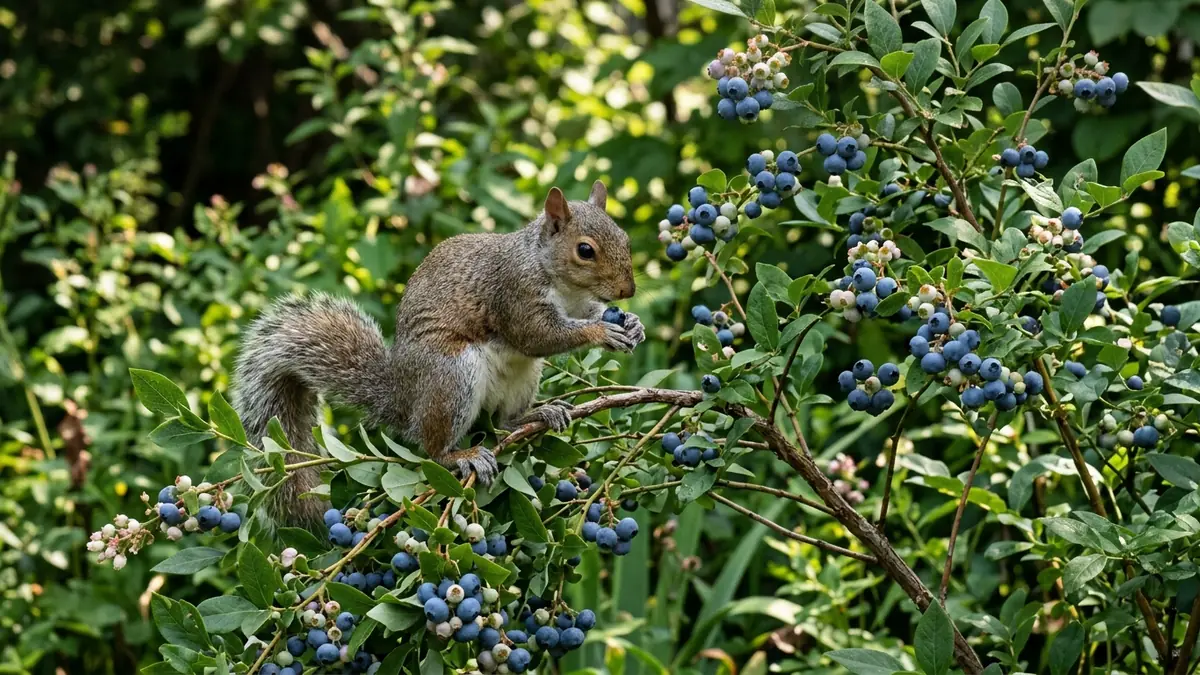
Do Squirrels Eat Blueberries? Bush Damage and Protection
Squirrels eat berries and may sample cultivated blueberries. A direct sighting matters because birds, chipmunks, and other wildlife can leave similar missing fruit.
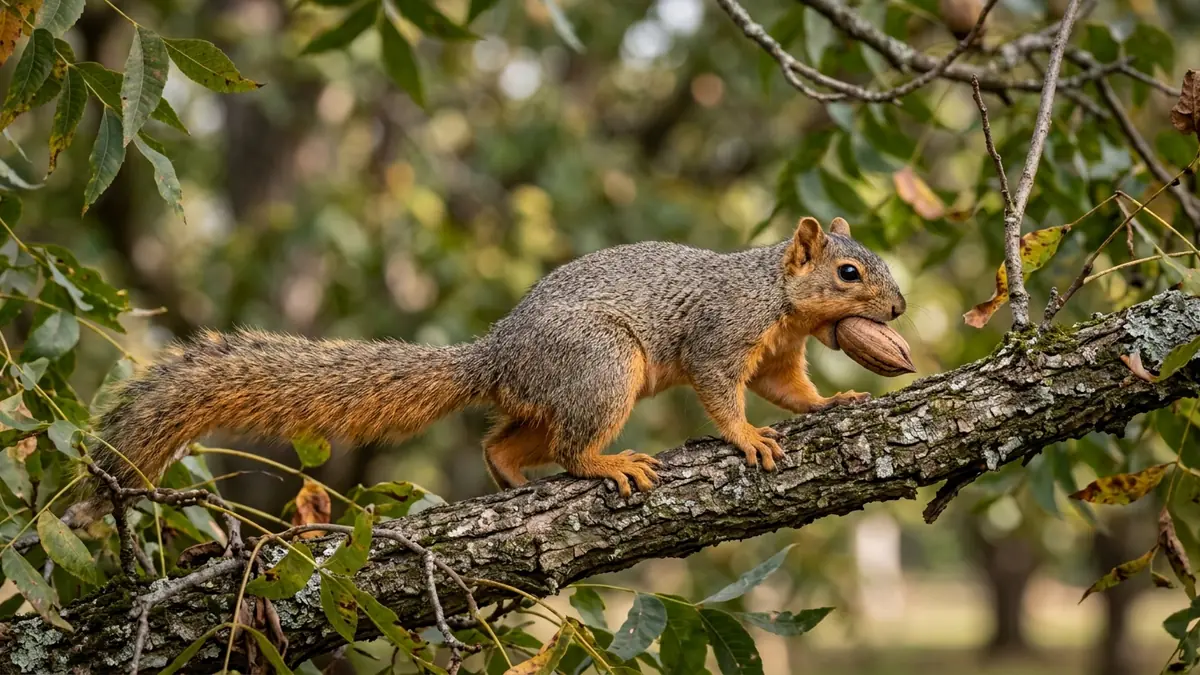
Do Squirrels Eat Pecans? Natural Food and Orchard Protection
Pecans are a natural hard-mast food for gray and fox squirrels. Squirrels eat, carry, and cache them, which can create conflict in home and commercial orchards.
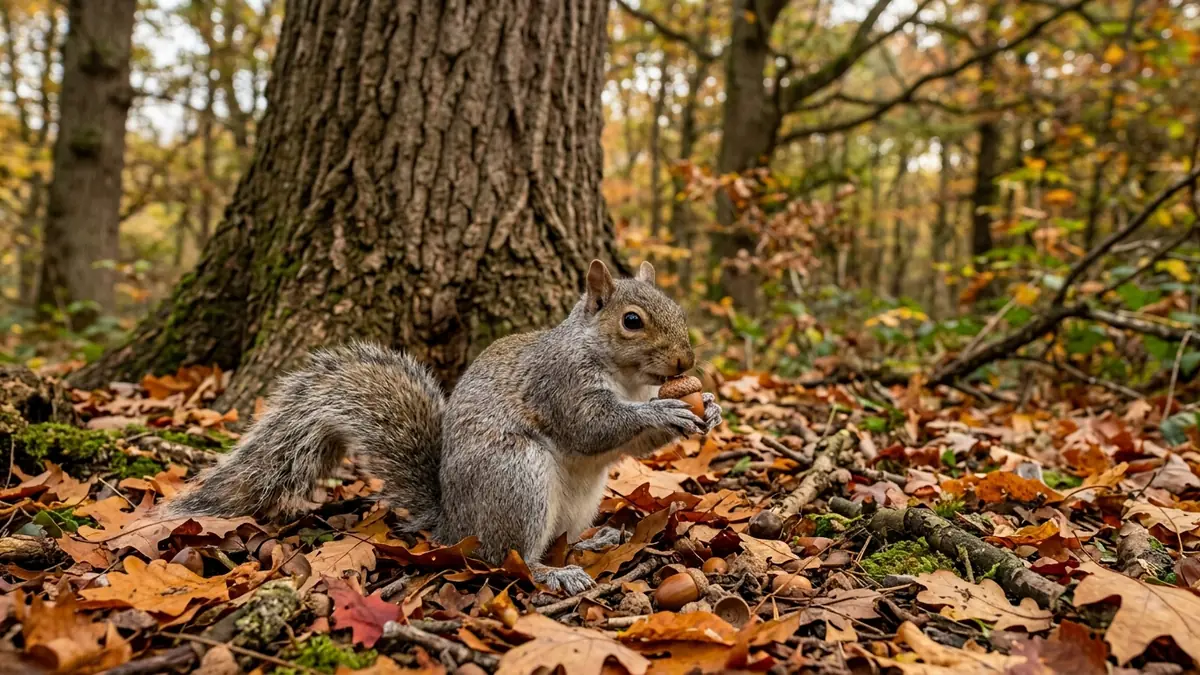
Do Squirrels Eat Acorns? Why This Natural Food Matters
Acorns are a major natural food for gray, fox, and other squirrels. They eat them, carry them, and cache them, linking squirrel survival with oak woodland ecology.